
A Story Worth Telling: What It Takes to Recruit International Talent Successfully

Discover seven practical steps for hiring international talent, from structured recruiting and relocation support to onboarding and team integration.


Germany’s skilled labor shortage has become a familiar business challenge. Companies need qualified people, while demographic change continues to tighten the labor market. Even in a weaker economy, the issue has not disappeared. The DIHK Skilled Labour Report 2025/2026 states that 83% of companies expect negative effects from labor and skilled labor shortages in the coming years. The Federal Employment Agency (Agentur für Arbeit) also reports that shortages remain high across many occupations.
For agencies, this creates a practical question: Where do you find experienced people when the local hiring market is too small?
Netigo, a Düsseldorf-based web agency from the TYPO3 partner network, found one answer by recruiting internationally. The agency now has 17 employees, nine of whom have an international background. That result came from a clear decision, structured support, realistic planning, and a lot of practical work.
We quote Tobias Bühne in this story because he is speaking from direct experience. As owner and managing director of Netigo, he invested the time, handled the process, supported people through the difficult first steps, and built a team where international hiring became part of everyday agency life.
It Started With a Hiring Problem
Netigo had been training apprentices since 2006. That helped build talent internally, but it did not solve every staffing need. Sometimes the agency needed people with more professional experience than apprentices or junior employees could bring.
The turning point came around ten years ago, when someone applied for a position. The candidate lived in Spain, came from Bolivia, and seemed like the right fit. Bühne wanted to hire him. The employment agency said no, because he did not have an EU passport at the time.
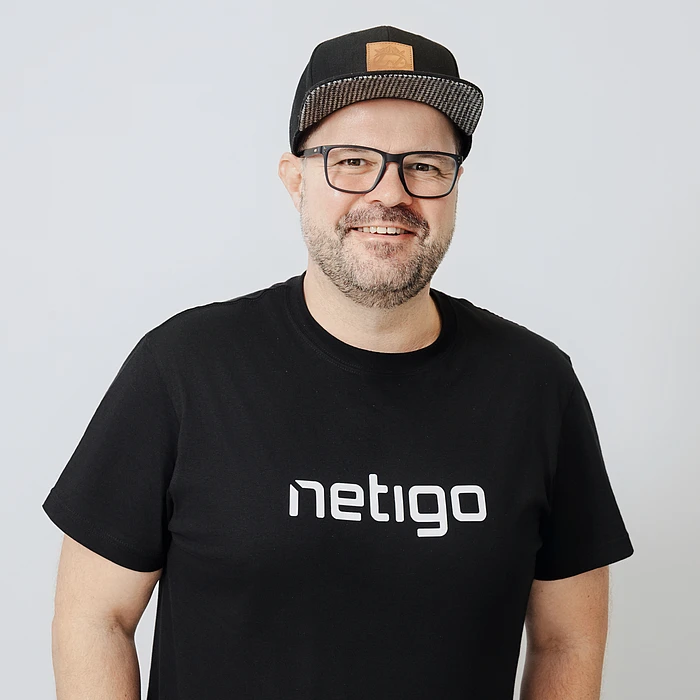
“I believe I should be able to hire the best person for the job, not the person with the right passport,”
says Tobias Bühne.
Netigo eventually found a way to hire him after he was naturalized in Spain. The experience shaped how the agency approached recruiting from then on. Qualification, motivation, and team fit became the relevant criteria. Nationality and initial language barriers became part of the process to manage.
In our latest edition of the Business Insights podcast, Bühne tells this in a hands-on, relatable way that shows what these steps mean in day-to-day agency life.
From that experience, seven practical steps emerge for hiring managers who want to expand their search beyond the local labor market.
Step 1: Look Beyond the Local Market
The first step is to stop treating the local hiring market as the only realistic source of talent.
For international recruiting to work, the selection criteria need to be clear. The central questions are whether someone can do the job, wants to contribute, and fits into the team. Language skills matter, especially in a German-speaking work environment. At the same time, language can develop after arrival. Professional quality, motivation, and honesty need to be visible from the beginning.
This approach expands the talent pool without lowering expectations. It keeps the focus on qualification and team fit instead of using passport, origin, or initial language level as early filters.
Step 2: Use a Structured Recruiting Channel
Companies hiring internationally for the first time benefit from a structured process. Programs such as “Hand in Hand for International Talents”, a joint project by the Chamber of Industry and Commerce and the Federal Employment Agency, can support companies in finding qualified professionals from abroad and navigating the formal process.
This structure matters because international hiring involves more than interviews. Candidate profiles need to be prepared, qualifications and language levels need to be documented, and the process has to be coordinated across countries, authorities, and timelines.
Step 3: Plan With Enough Lead Time
International recruiting needs time. In Netigo’s case, the process through the program took around nine months from first contact to the first working day. Bühne sees six months as a realistic minimum.
This timeline needs to be part of workforce planning. International hiring is difficult as an immediate fix for an urgent vacancy. It works better when companies know which skills they will need and start early enough.
The lead time includes more than formal approval. It covers interviews, assessments, documents, travel, relocation, accommodation, registration, and the personal decision to move to another country.
Step 4: Treat Housing as Part of the Process
Housing can become one of the biggest practical barriers in international recruiting. Finding accommodation is already difficult in many German cities. For someone applying from abroad, it can be almost impossible without support.
Bühne’s example makes this point concrete: for one new colleague, he contacted around 70 shared apartments before finding accommodation.
For hiring managers, this means that relocation support cannot stop at the contract. A new colleague needs an address, registration, a bank account, and a stable starting point for everyday life. Companies should define early what kind of support they can realistically provide and where external help may be needed.
Step 5: Stay Close During the First Weeks
The first weeks after arrival are critical. Administrative steps such as registration, opening a bank account, and understanding local processes can be difficult without guidance.
Bühne describes this very practically: “I pick up colleagues from the airport and then we go straight to the registration office.”
That kind of support requires awareness of the essential first steps and a willingness to stay close while the new colleague is still finding their way.
For hiring managers, the key point is to make the start manageable. Early support helps prevent small administrative hurdles from becoming major obstacles.
Step 6: Make Onboarding a Team Responsibility
Successful integration cannot depend on one person alone. It needs to be supported by the team and backed by a clear onboarding structure.
At Netigo, new colleagues go through a detailed onboarding process regardless of background. That gives everyone the same orientation: how the agency works, who is responsible for what, where to ask questions, and what collaboration should look like.
International hiring adds practical questions around language, communication, and settling in. The core requirement remains the same: new colleagues need clarity, access to information, and a team that understands onboarding as shared responsibility.
Step 7: Be Honest About Skills and Expectations
Recruiting has changed in the age of AI. Traditional tests are no longer as reliable as they used to be, which makes honest communication even more important.
Applicants need to be clear about what they can do and where they still need support. Employers need to be equally clear about the role, the working environment, expectations, and development opportunities.
Skill gaps can be addressed when both sides know about them early. False expectations are harder to fix later. This applies to all recruiting, and it becomes especially important when someone is considering a move to another country for a job.
What Made It Work
Netigo’s success with international recruiting came from several connected steps.
The agency expanded its search beyond the local market and focused on qualification, motivation, and team fit. It used a structured program instead of handling every part alone. It was planned with enough lead time. It treated housing, registration, and early administration as part of the start. It supported new colleagues closely after arrival. It made onboarding a team responsibility. It relied on honesty when assessing skills and expectations.
None of these steps is spectacular on its own. Together, they show what international recruiting requires in practice.
This article is based on a conversation with Tobias Bühne, owner and managing director of the Düsseldorf-based web agency Netigo, in the Business Insights podcast. The full episode is available here, along with a complete English transcript available here.

