
The Future of TYPO3: Adapting for Digital Sovereignty in an Ever-Changing World
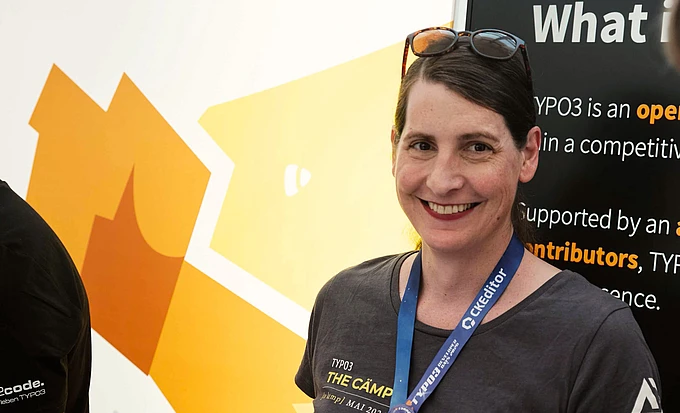
TYPO3 is facing major changes across the IT sector and the web. In this opinion piece, TYPO3 Association Vice President Jana Höffner explains why the Association, the TYPO3 Company, and the community must embrace change as an opportunity to strengthen TYPO3’s future.

As one of the most successful enterprise open-source content management systems (CMS), TYPO3 has grown into something far greater than just another open-source project: it is now a cornerstone of digital sovereignty. In an era when data privacy, regional autonomy, and open standards are crucial, TYPO3 offers major enterprises as well as small and medium businesses, public institutions, and developers an independent alternative to massive proprietary ecosystems.
Yet, with great success comes great scrutiny. Our very prominence has made us a primary target for external forces who would benefit immensely from our project's disruption or failure.
The Environment Is Changing
To understand where TYPO3 is going, we must be honest about the transformed environment we act in:
- Proprietary Software Vendors — Legacy, closed-source enterprise platforms are competing for market share with agile open-source solutions. In response, they are leveraging aggressive marketing campaigns, vendor lock-in tactics, and lobbying efforts to cast doubt on the security and long-term viability of open-source frameworks.
- Criminals and Foreign Actors — Corporate and institutional websites are prime attack targets, and TYPO3 sites are no exception. As an enterprise-grade platform powering critical digital infrastructure, we face sophisticated, automated cyberattacks, zero-day exploits, and supply-chain vulnerabilities orchestrated by bad actors aiming to destabilize institutional trust.
- Changing Political Landscape — Shifts in global geopolitical priorities and trade policies often disrupt open-source dynamics. From potential export restrictions on software and cryptographic standards to policy shifts that inadvertently favor massive tech monopolies, international regulation is becoming increasingly volatile.
- Competing CMS Platforms — The CMS landscape itself is competitive. Other CMS platforms are moving rapidly, redefining user experiences, and especially proprietary platforms are aggressively marketing their products to potential clients. TYPO3 is still strong, but the loss of market share during the last half-decade cannot be denied.
The AI Paradigm Shift
Overlaying all of this is the meteoric rise of artificial intelligence technologies. Generative AI, automated coding, and AI-driven content generation are turning the internet completely upside down. Search engines are evolving into answer engines, content creation workflows are changing overnight, and the way code is written and maintained is shifting fundamentally.
We cannot afford to look like a deer in the headlights. Clinging to nostalgia for the good old days of simple web publishing and hoping this digital transformation won't affect us is a fast track to obsolescence.
The TYPO3 Association, the TYPO3 Company, and our global contributors share a profound responsibility that extends far beyond writing code. We are accountable to:
- Our Enterprise, Institutional, and Countless Small and Medium-Sized Business (SMB) Users — Relying on us for security, stability, sovereignty, and cutting-edge features.
- Agencies and Freelancers — The thousands of professionals who have built businesses, careers, and livelihoods entirely around the TYPO3 ecosystem.
- The Open-Source Philosophy — Ensuring code remains democratic, collaborative, and free from monopolistic control.
- The Evolving Regulatory Framework — Navigating increasingly complex compliance laws (such as Europe’s Cyber Resilience Act and strict data protection mandates) that demand rigorous software supply-chain security.
A Crucial Reality Check
To navigate this storm, we must step back and answer five fundamental questions about our trajectory:
- Governance — Is our community structure agile enough for fast crises?
- Competition — Are our products technically superior to modern rivals?
- Finances — Is our funding model sustainable for long-term R&D, recruiting, and education? Do we keep and gain financial leverage to compete in the markets?
- Viability — Can businesses still make a good living working with TYPO3?
- Expansion — Can TYPO3 continue to be established in new markets around the world?
I want us to be able to answer all these questions with a clear and loud Yes!
The stakes are high. A failure to adapt could mean not just a decline in market share; it would be a severe setback for democratic technology infrastructure and would jeopardize the livelihoods of many people who depend on us.
Turning Turmoil Into Chances
What to do with these realizations? Is the project doomed? Certainly not! Our strength is our community, and TYPO3’s own flexibility and its power to adapt to new challenges. After a long consultation process, we now have a substantial proposal on the table to put contribution on a more solid organizational footing. The drafts for the new unit structure are now open for discussion and I would like to ask you to use the given forum to make your voice heard. You’ll find the drafts in the pull requests for the Rules for TYPO3 Units and the Rules for the TYPO3 Unit Cooperation Panel.
The Company has been working on new revenue models to secure funding for the project and, hopefully, further improve it.
What look like threats are actually unique chances to make TYPO3 even harder to pass by.
- Proprietary vendors want to see us fail? That's our chance to sharpen what only open source delivers: transparency, ownership, and freedom from vendor lock-in.
- Criminals and foreign actors probe us? A chance to lead on security and earn deeper trust as the hardened, community-audited alternative that we are.
- Economical blackmailing? A chance to become the reference platform for Europe's digital sovereignty agenda.
- When other open-source CMSs compete for share? A chance to collaborate and join forces to promote the idea of free and open software worldwide. But also to differentiate and show where TYPO3’s strengths lie.
- AI is upending the whole internet? A chance to rethink TYPO3’s products and adopt governance early, instead of catching up later.
We can already put some checks on that list. Just to mention a few examples of the vast activities throughout the community:
- Our Community Expansion Committee and Project Ambassador Mathias Bolt Lesniak spreading the word throughout the world.
- Our Security Team preventing major incidents and bad press about TYPO3.
- Our CMS is starting to become a synonym for digital sovereignty.
- Our deepened relationships with other open-source projects.
- Setting the gauges for a future-proof project governance.
These are just the beginning of what can become. Hence, this piece is not thought to be a scare crow, but to motivate and invite everyone in the community to contribute to our project’s future.
A CMS Owned by Its Community
Fortunately, TYPO3 has a unique structural advantage: We are not beholden to venture capitalists or volatile public markets.
This means that we as a community can shape our project's future through the democratic processes described in our by-laws. The Board also works on improving synchronous and asynchronous discussions and participation formats, such as the recent Dialogue Days and new governance and change management in the TYPO3 Policy Repository.
This is a call to action for every developer, agency owner, contributor, and community member. Let's build the next chapter of TYPO3 together.
Disclaimer: This is an opinion piece by Jana Höffner, representing her personal view and motivation for her board work. It does not necessarily represent the opinions of the Association's Board as a whole.
