
Open Source Contribution as an Agency Investment
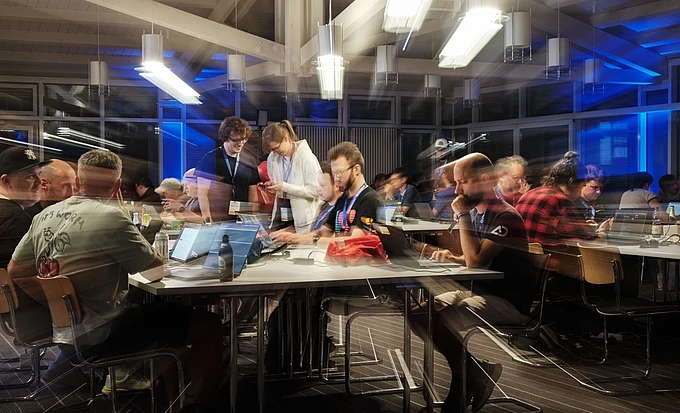
Explore how TYPO3 open-source contributions can help agencies build expertise, attract talent, strengthen retention, and create lasting business value.


Introduction
Open-source projects are shaped by many different kinds of contribution. Some are more visible, such as developing the Core or speaking at community events. Others happen more quietly: maintaining extensions, writing documentation, creating marketing resources, joining team meetings, or simply sharing knowledge and experience with others.
For TYPO3, these contributions bring together people from across the ecosystem. Many of them work for agencies that build their own business on TYPO3 — which creates an interesting relationship. Agencies benefit from the work of the wider community, while the time and expertise they contribute in return are resources they could otherwise invest in their own business.
Florian Froidevaux has spent years on both sides of it. He works at in2code, co-leads the TYPO3 Marketing Team, and joined the TYPO3 Business Insights podcast to talk about what that balance looks like in practice. His experience shows what it can look like when an agency does not treat open-source engagement as something employees pursue exclusively in their spare time, but actively creates room for it.
And that raises a question worth looking at more closely: What does an agency get back when it gives people time to contribute?

Making Room for Contribution
There is no single way to contribute to an open-source project. Florian compares it to volunteering in a sports club: some people coach, others maintain the grounds or take responsibility on the board. A software community works in much the same way.
“There are all kinds of contributions.”
– Florian Froidevaux
For agencies, fostering that engagement can therefore be less about telling employees to contribute and more about giving those who want to participate the opportunity to do so.
What Comes Back?
Giving employees time to contribute means accepting a real cost. In Florian’s case, for every two hours he spends on company marketing, roughly another hour goes into contribution. Across the agency, he describes the overall investment in contribution time as substantial.
The return is much harder to put into a single number. But several effects become visible.
One is recruiting. A company that actively supports participation in an open-source community can become attractive to people who want exactly that opportunity. Another is retention: employees who build relationships, expertise, and a role within a community may value an employer that enables them to maintain that involvement.
“You don't switch to another company just because you might earn a few hundred euros more if you know that, as a result, you might no longer be able to do what you love […] at work.”
Visibility is another effect. Employees who contribute become known for what they do. That may make them visible to other employers, but it also makes their expertise — and by extension their agency’s expertise — visible to potential customers.
From Contribution to Customer Expertise
The benefits can reach customer work directly. People who actively participate in a project know more than how to use the software: they understand how it develops, who is involved, and how changes are made.
When a problem in the TYPO3 Core affects a customer project, contributors may be able to work on the fix themselves and submit it back to the project. When a new TYPO3 version arrives, people involved in its ecosystem bring first-hand knowledge into training and consulting.
That creates a form of expertise that is difficult to reproduce from the outside.
“You no longer have to explain that you're the TYPO3 expert.”
There is no simple formula for calculating the return on contribution. Time spent in teams, on code, documentation, meetings, or community activities remains time that an agency cannot spend elsewhere. But looking only at those hours misses what participation can create in return: deeper expertise, stronger professional networks, visibility, opportunities for employees to develop beyond their day-to-day roles, and closer ties to the project an agency builds its business on.
A Commitment to the Ecosystem
At the same time, that investment reaches beyond the individual agency. Open-source projects need people who are willing and able to participate. When companies create room for their employees to do so, they help maintain the structures through which knowledge is shared, decisions are discussed, and the project continues to develop.
For agencies, contribution can therefore be both a commitment to the ecosystem and an investment in their own organization. Florian’s experience shows that these two sides do not have to compete with each other. Giving something back can also create value that comes back in different ways.
Learn more about how you can contribute to the TYPO3 project
This article draws on insights shared in the TYPO3 Business Insights podcast. The full episode is available here, along with a complete English transcript available here.

