
Growing TYPO3 Camps Together: Takeaways from the Roundtable at TYPO3 Camp Munich
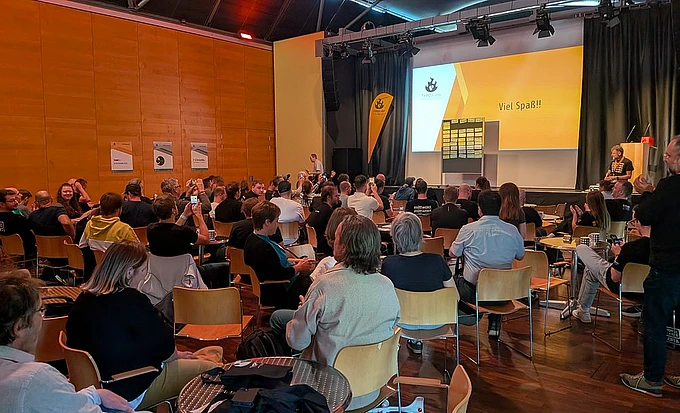
Fewer attendees, later sign-ups: TYPO3 Camps and other events are facing tough times. At TYPO3 Camp Munich 2026, we held a roundtable to tackle this challenge together. Here are the best ideas from our roundtable to fill the next camp.

Why We Sat Down Together
I have spent a good part of my career in open-source marketing, and I once organized a community camp myself. So I know the feeling: the venue is booked, the sponsors are on board, the session board is ready – and the ticket counter barely moves. Playing in a band taught me the same lesson: Selling tickets to a show is exactly as hard as selling tickets to a conference. Many TYPO3 Camp teams are in that spot right now. Fewer people are attending, and more of them register at the very last minute. For volunteer organizing teams, that creates a lot of uncertainty: Will the event turn out successful? Should we keep going next year?
At TYPO3 Camp Munich 2026, my first TYPO3 Camp by the way, I offered a roundtable session on exactly this question. There were no slides to sit through, just an open discussion with camp organizers, representatives of sponsoring partners and community members. Our goal was simple: collect practical ideas that help organizers promote their camps, and find synergies between the camps and the volunteers who want to help. We also asked a second question that turned out to be just as important: How do we reach people inside the TYPO3 bubble, and how do we reach those outside of it?
Marketing for TYPO3 Events: What We Came Up With
We covered a lot of ground: social media, PR, local marketing, newsletters, fostering young talent, events, sponsoring, the program itself and resources. As you can see in the following image, we turned the collection into a Google Slides to grant people access and keep it open for further ideas and feedback.
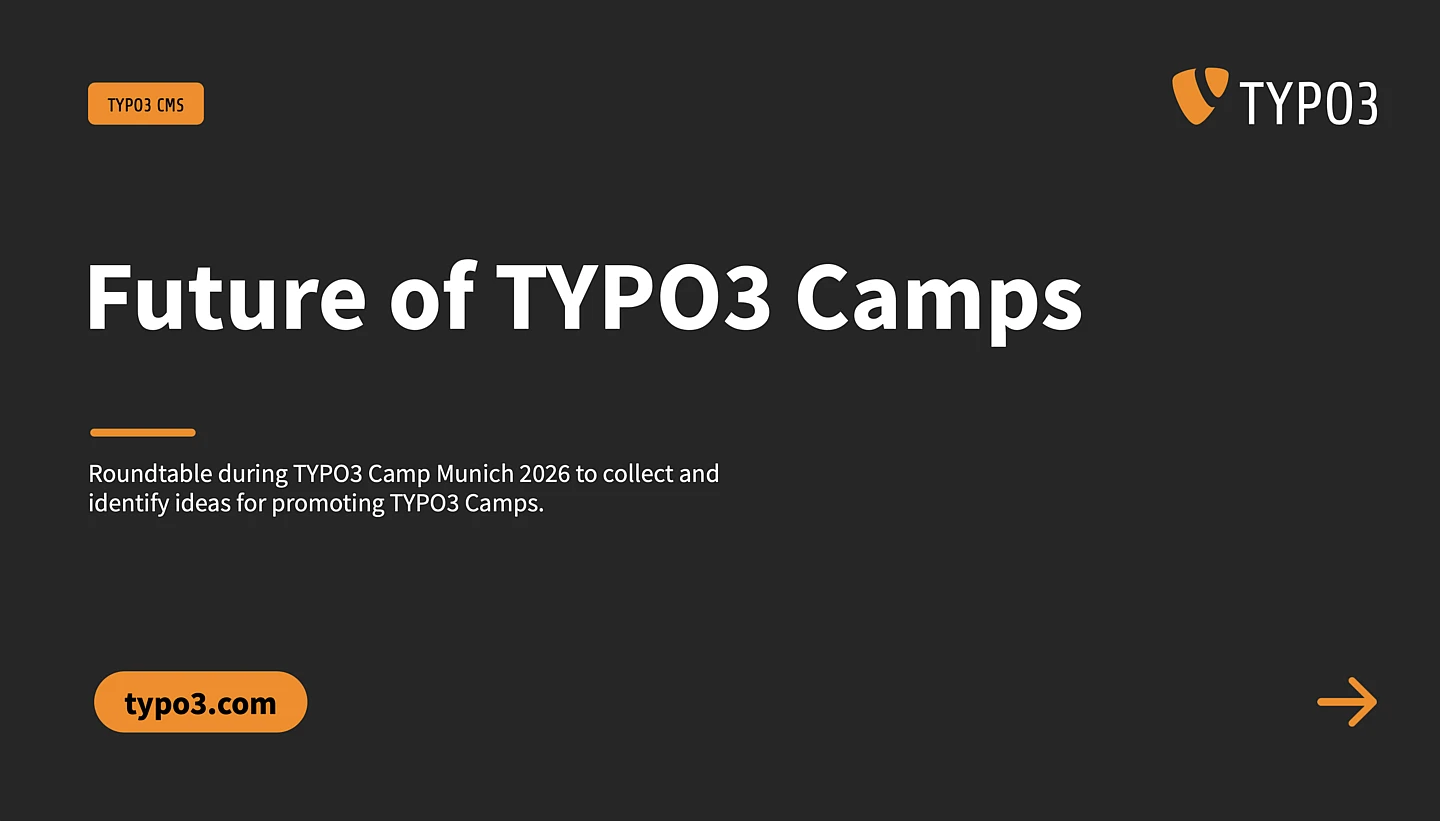
The following material does not include the entire list. But due to the huge amount of input I received, providing the entire content would end up in a trilogy. So, here are the ideas that stood out most – you can find the entire presentation by clicking here or on the title slide above.
Social Media: Show the Vibe, All Year Long
Social media isn't just a channel for the four weeks before the camp. It builds brand recognition throughout the year, and the more regularly you post, the more often you show up in people's feeds. A simple publishing plan helps a lot.
- Collect material during the camp. Take photos and videos of sessions, the barbecue, the warm-up and even the preparational meet-ups behind the scenes. Film the first minutes of a session or interview participants, then use that content for next year's promotion.
- Let attendees spread the word. Provide a ready-made attendee tile ("I'm attending TYPO3 Camp Munich – meet me there!") and ask people to share it with their own network.
- Find prospects actively. Search LinkedIn for "TYPO3" and filter for people in your region. You'll find everyone with TYPO3 in their skills or work history. That's your local audience.
Public Relations: Prepared Content Gets Published
Magazines, local newspapers, university papers and podcasts are all worth approaching. The key learning: they are far more likely to publish content you have already prepared for them.
One idea that really caught on was a shared advertorial for all camps in relevant tech and marketing magazines, something no single camp could afford on its own. On top of that, the camp website can link to blog posts from speakers, attendees and agencies.
Local Marketing: Think Region, Not City
Many camps focus on their city, but potential attendees often live in the wider metropolitan area. On this matter: Naming a camp after its region might create a bigger impact than naming it after its city (in the context of TYPO3Camp Munich, which took place in Puchheim - should it become TYPO3 Camp Bavaria, instead? A best practice shows TYPO3 “The Cämp” immediately creating a unified sense of belonging for Baden-Württemberg, instead of calling it “TYPO3 Camp Heidelberg”).
Further ideas included:
- List the camp on local event platforms and city blogs (e.g. meetup, eventbrite, luma, muenchen.de, in-muenchen.de, muenchenevent.de)
- Team up with local agencies and sponsors so they can post "Our team will attend the upcoming TYPO3 Camp…".
- Create a camp map on typo3.community and promote it at events like the TYPO3 Developer Days, so people can find the camp nearest to them.
Newsletter: Your Most Engaged Contacts
Although critics have been saying newsletters are dead, it’s surprising how much traction you can gain with a direct point of contact that goes beyond your social media feed. In terms of newsletters, here are the ideas:
- People who attended in previous years are the easiest ones to win back, so contact them directly, create an easy workflow to be allowed to use their contact details (DOI).
- Add a newsletter sign-up to your camp website, offer an incentive such as a ticket discount code, and set a realistic send-out plan (no, it doesn't have to be every two weeks).
- Agencies and sponsors often run their own newsletters too, so offer them ready-to-use material about your camp.
Young Talent: Go Where the Students Are
Universities are a natural place to start reaching people outside the TYPO3 bubble. Ideas showed a broad range:
- Having university marketing teams send camp information to computer science faculties,
- Agencies running little workshops for students throughout the year to build on the momentum. A "build a mini-website" format, inspired by the TYPO3 Surfcamp, would give students something real to take home.
- Reduced ticket prices and a clear message about career options and networking can make the camp even more appealing to them.
Program: Tell People What to Expect
The barcamp format has one marketing weakness: nobody knows the program in advance. The group suggested a few fixes:
- Announce a couple of sessions or keynotes beforehand. One or two is enough.
- Show the programs from previous years so people know what kind of content to expect.
- Remember that many topics, like accessibility or AI, aren't TYPO3-specific. Use them to reach people beyond developers and outside of the TYPO3 bubble.
- Offer dedicated contribution time, like a coding night, so attendees leave having made real progress for the TYPO3 ecosystem.
We also asked whether weekend barcamps still fit people's lives, or whether Friday and Saturday would work better. While a consensus on this matter is yet to be found, it is up to each camp organizing team to decide what’s best for their local community.
Resources and Sponsoring: Distribute Effort, Maximise Synergies
For many teams, the biggest pain point is finding people to help the organizing committee, the so-called helping hands. Our answer: don't try to solve it alone.
- A shared pool of volunteers. Collect a list of people with specific skills, like photos, videos, blog posts or social media, who can support different camps, often remotely.
- A FlickR folder for photo sharing. Maybe some attendees have taken pictures and videos during the event which could be reused by other attendees or even the organizing committee.
- Ask for small, specific tasks. "Could you take pictures on Saturday?" works much better than "Do you want to help?"
- Collaborative sponsoring. Offer one sponsor package that covers all camps in a year, with each camp getting a share. Sponsoring has become harder in recent years, so new formats such as media, food or training sponsorships can open more doors.
- A central ticketing platform for all camps was also on the wish list.
Stronger Together: the Open-Source Way
If this roundtable made one thing clear, it's that no camp has to figure it all out alone. Almost every idea on our list gets better when camps work together: a shared advertorial, a shared volunteer pool, a shared sponsor package, a camp map that points people to the next event.
That is exactly what open source is about. We build TYPO3 together because pooling our expertise and resources lets us create something none of us could build alone. Our camps deserve the same spirit. They are the place where the local communities come together. When organizing teams share what works, reuse each other's material and lend each other a hand, we can achieve something big and give TYPO3 Camps a bright future.
This is just the beginning. The ideas above are a first collection, and we want to turn them into a practical concept paper for all camp organizers. For that, we need your input.
Do you have more ideas, experiences or feedback? Share them with us in our short survey. Whether you organize a camp, want to volunteer or simply love attending, every contribution helps.
You can find all ideas from the session in the full presentation via this link.
*Disclaimer: This presentation is a collection of perspectives, gathered during TYPO3 Munich and does not represent my personal opinion or any official provided material from TYPO3.
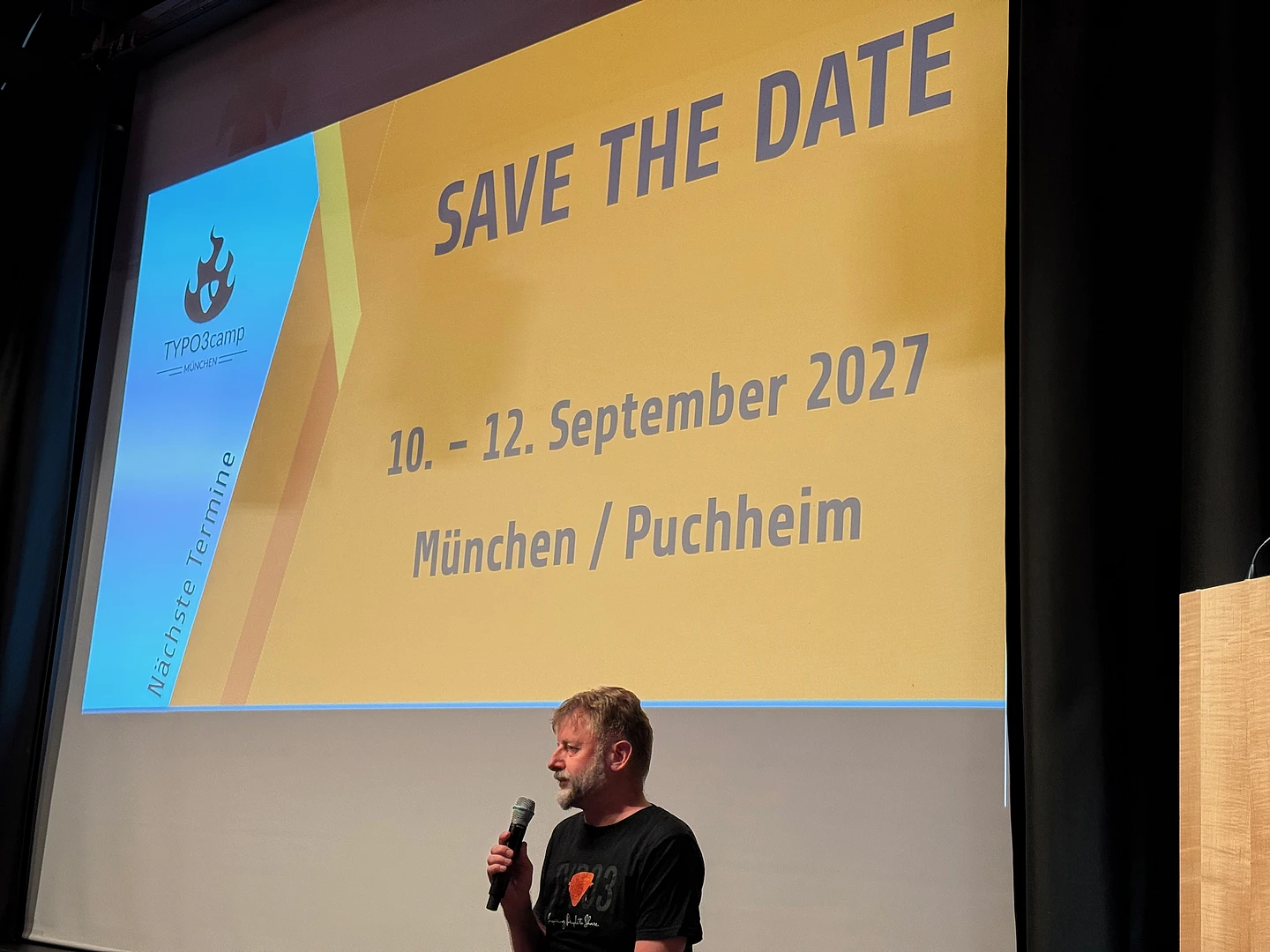
I want to highlight that TYPO3 Camp Munich has been my very first TYPO3 Camp and it set the bar pretty high. The entire event has been made with so much passion and dedication that I am definitely coming back for next year’s edition, celebrating 20 years of TYPO3 Camp Munich with the local community. Thank you for having me.
Now, go check where you can support your local TYPO3 Camp and see you there!
