
Beyond the Rim of the Plate: Notes From Kirby Konf 2026
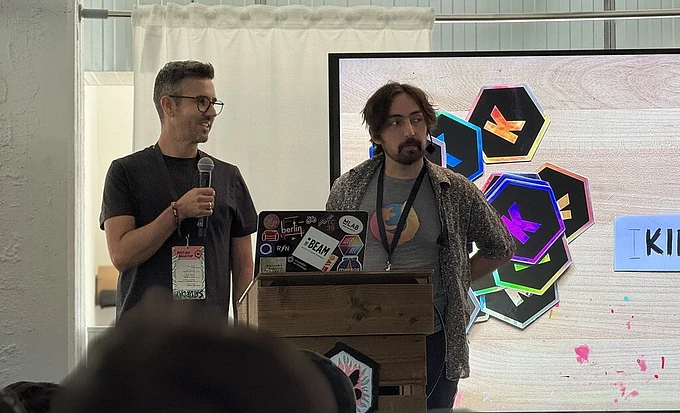
On 25–26 September 2026, I spent two days in Mainz, Germany, at the first conference for the Kirby CMS. The crowd was mostly designers rather than developers, and their take on AI, sustainability, and community gave a developer like me plenty to think about.

Kirby Konf is the conference of the Kirby community. Kirby is a lightweight, file-based CMS built on PHP that targets a different segment of the market than TYPO3 and emphasizes a lightweight setup, low server requirements and an easy-to-learn editing interface. The first edition of this event was planned for March 2020 and called off due to Covid just two weeks before the doors were set to open.
The Kirby team had help from Marc Thiele, who is friends with Kirby’s creator, Bastian Allgeier, and who some of you will remember from his talk at T3CON24. Marc runs beyond tellerrand, a conference named after a German saying: über den Tellerrand schauen, or looking beyond the rim of your own plate.
A Room Full of Designers
My employer, mittwald, was one of the event’s partners, which is why I was there. At TYPO3 events, you meet developers, developers, and more developers. I have a developer background myself, so I’m part of the problem. Many (if not most) of the Kirby folks have a design background, and most of the talks were about design. It was refreshing to spend time in a community with a different viewpoint.
The most obvious difference is that there was less talk about tech. TYPO3 and Kirby are both built on PHP. At pretty much every TYPO3 camp or conference, someone gives a talk on what’s new in the latest PHP version. The Kirby folks treated that as a solved issue. For them, the stack is a utility, like gas coming out of the pipe or electricity from an outlet. It’s just there, and not the core of the discussion.
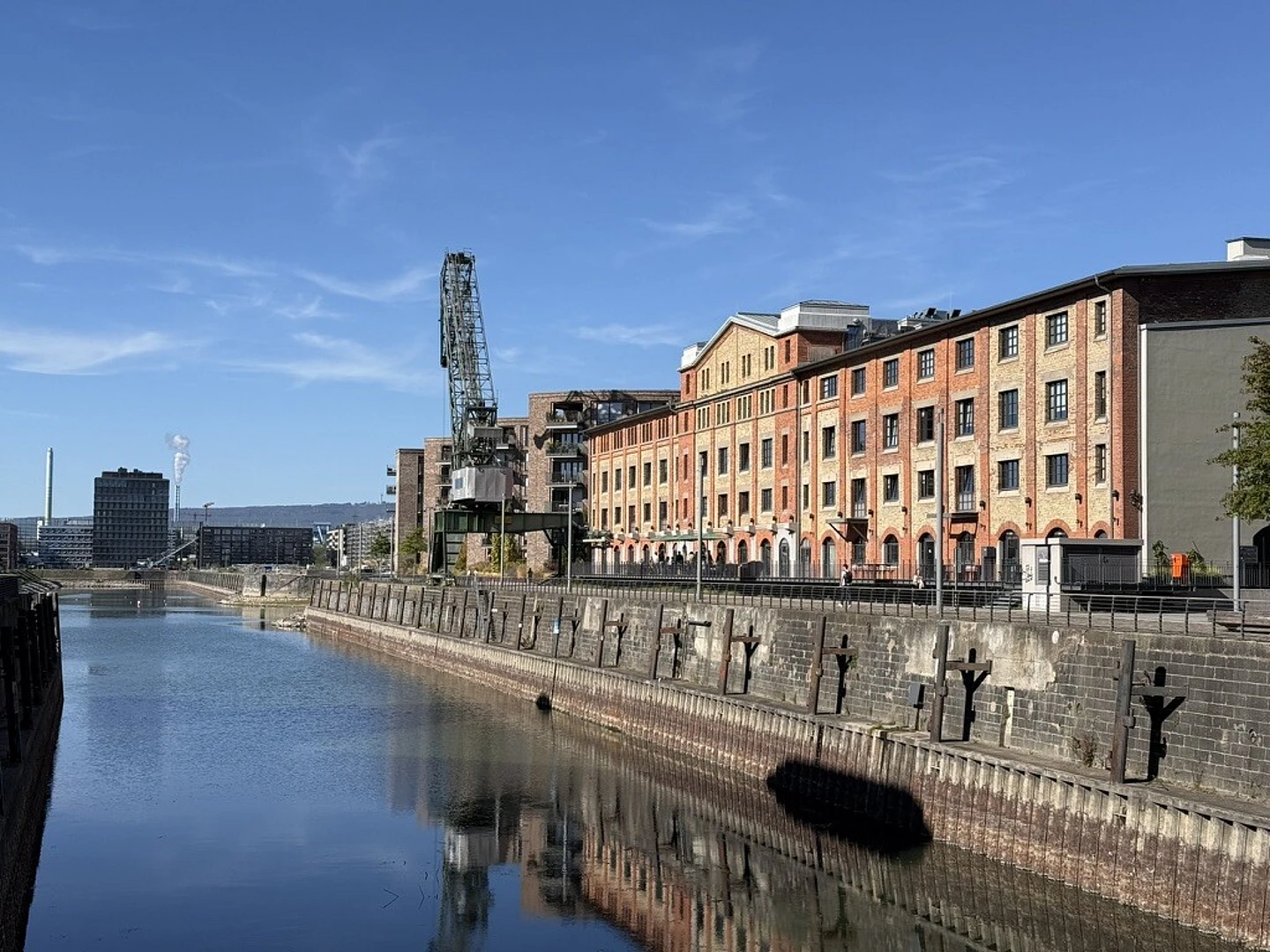
More Hallway Than Stage
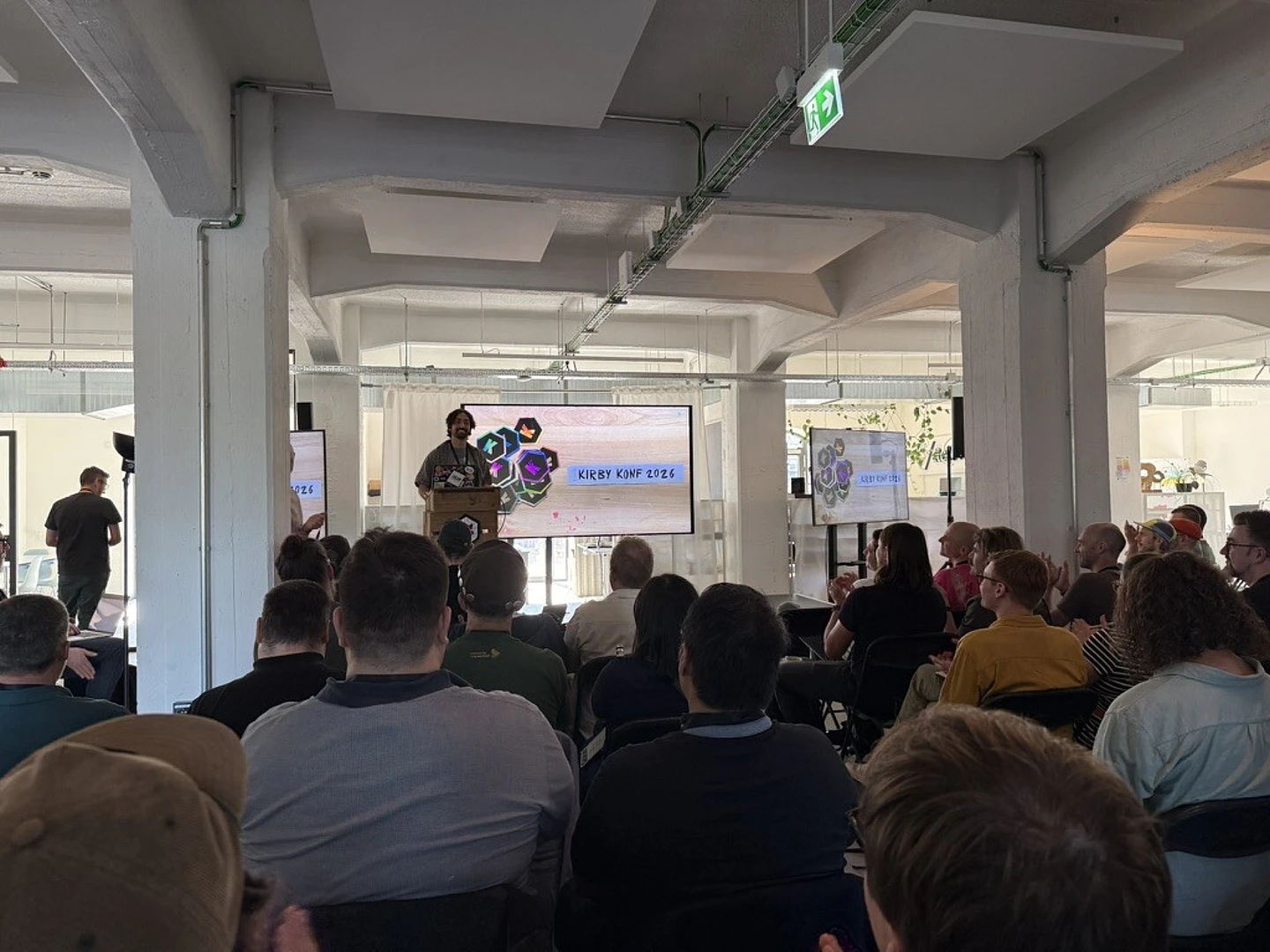
Over two days, a single track of talks alternated with long breaks, so people could hang out and chat. The Kirby team opened with a keynote from Bastian about the long road to this first event and the plans for Kirby 6. The vibe was really good, and I think a lot of that comes from Marc’s experience. He really knows how to organize a conference to make people feel welcome.
Using Kirby for enterprise projects isn’t a regular thing, but one agency talked about doing exactly that, on a big project where elsewhere they might have used TYPO3 or Drupal. I wanted to hear how they handled scaling across multiple servers, and they took a really interesting approach by using Git to synchronize (and version-control) the site content across multiple servers. Most of the talk however was about content architecture: how they built it around the editors in their client’s company, and the design system they developed.
Other talks covered accessibility and how web design has changed over the past 30 years or so. Quite a few people there have been doing this job for a long time, and I had several conversations reminiscing about the wild west days of Flash, when anything was possible. Those are also the people who can tell you what actually works in design, because they’ve been through all those evolutions.
AI Skeptical, but Not Sitting It Out
A few talks were about responsibility and sustainability, which isn’t a common topic at TYPO3 conferences. One covered carbon.txt, and others looked at the impact of AI on everything. Spoiler alert: it's not good.
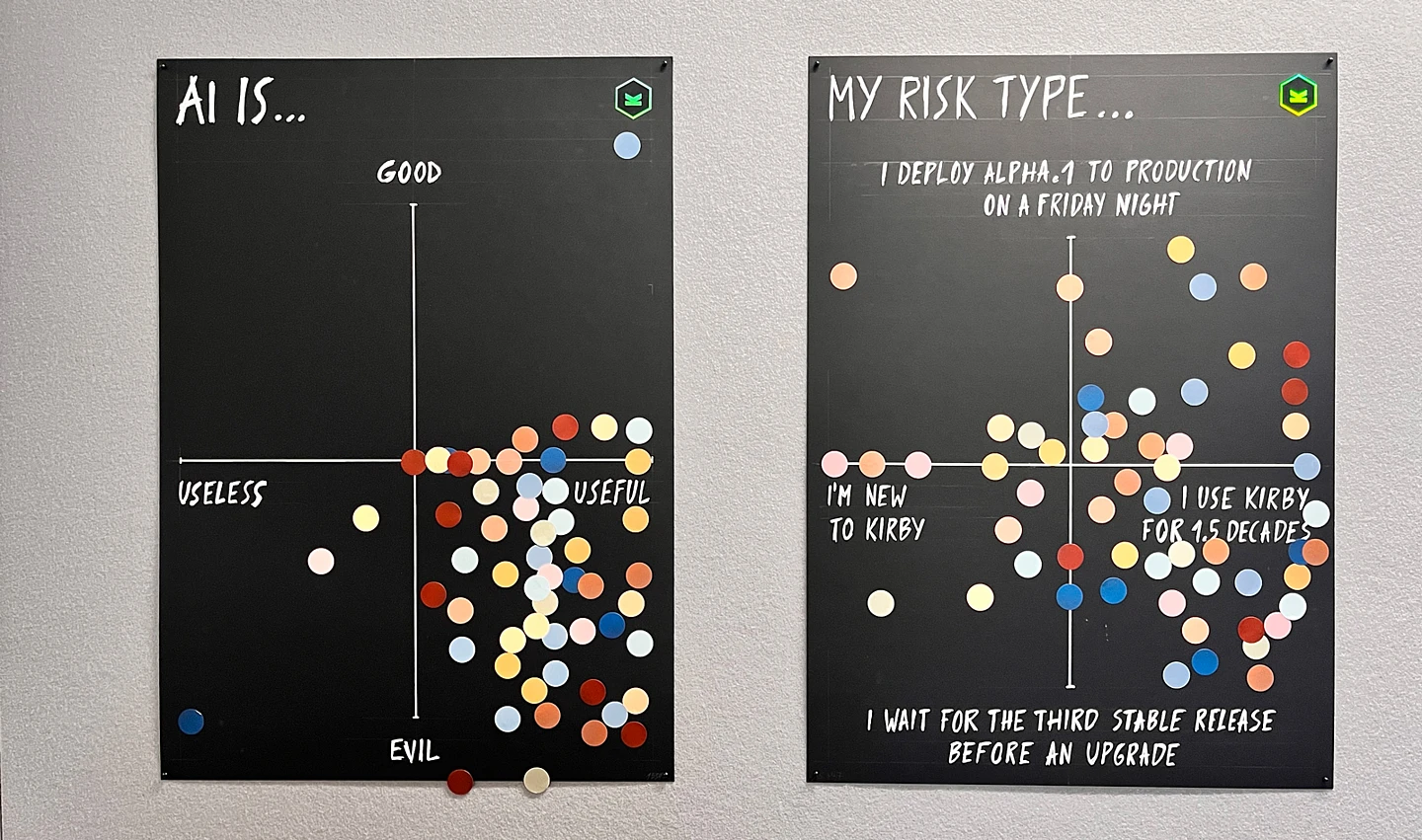
Most people had a really differentiated view of AI. I was at DrupalCon Rotterdam recently, where Drupal’s new AI integration was received very positively by the community. Kirby Konf had a sticker wall with a two-axis grid, good versus evil and useful versus useless, where you could place your own sticker. I think 99% of the stickers ended up in the evil-but-useful corner, which tells you a lot about this community. For them, AI is too useful to ignore, but they know it’s “evil”.
Kirby does have the usual AI integrations, such as MCP servers. Whether that measured approach was a strategic decision or just emerged from how the community thinks, I don’t know. I think TYPO3 is also taking a rather careful approach.
Commercial on Paper, Communal in Practice
What I keep coming back to is how Kirby built such an open and welcoming community around what is essentially a commercial product. You can download and try the CMS for free, and you buy a license for each site when it goes live. It’s a one-time payment, starting at €99, with no subscription. I find that pricing extremely fair. Since around 2012, they’ve funded the project sustainably that way, with no outside investment. Sustainably financing their development is a challenge that many open-source projects also have (TYPO3 included), and it was interesting to see a community choosing an entirely different approach to financing than most open-source projects do with having a non-profit organization backing their community.
Yet I found many of the things I know from open source communities: the openness, and the drive to work together when you hit a problem. In TYPO3, if a feature is missing, it doesn’t take long to find a few folks who’ll build an extension for it. Kirby works the same way, even with a company and a CEO behind it. Just like TYPO3, they have a very busy chat room and an equally busy forum in which the community stays connected and helps each other out. And to be honest, the relationship between community and the company does not feel like a regular client-vendor relationship, but surprisingly similar to one between an open-source community and its core development team. Maybe the real lesson here is: openness and generosity don’t depend (or don’t have to, at least) on the legal structure behind a project, but on the people who choose to show up for each other.
Go See How Others Do It
Thanks to Bastian and the Kirby team for not giving up on this conference after 2020, and to Marc for helping them pull it off.
If I had to pick one takeaway for the TYPO3 community, it’s this: get a fresh perspective. Get out of your own bubble to see what other communities are doing, and what works well for them.
