
Also Light-Years Ahead of its Reputation: Notes From DrupalCon Rotterdam 2026
In late September, I spent three days among Drupal’s European community in the Netherlands. Between an awards night on an ocean liner and a trivia night where I lost points for complaining, I found that our cousin’s biggest worry is one TYPO3 shares.

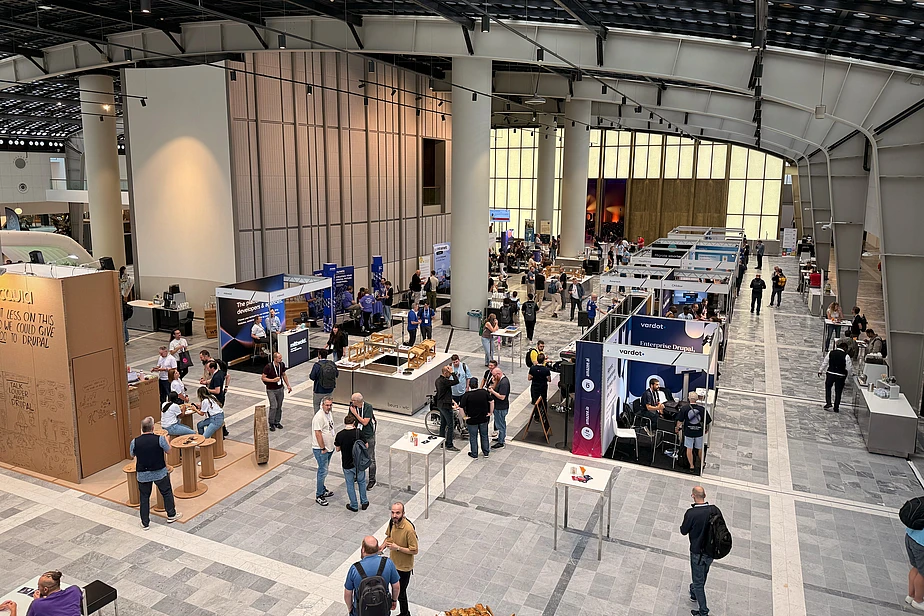
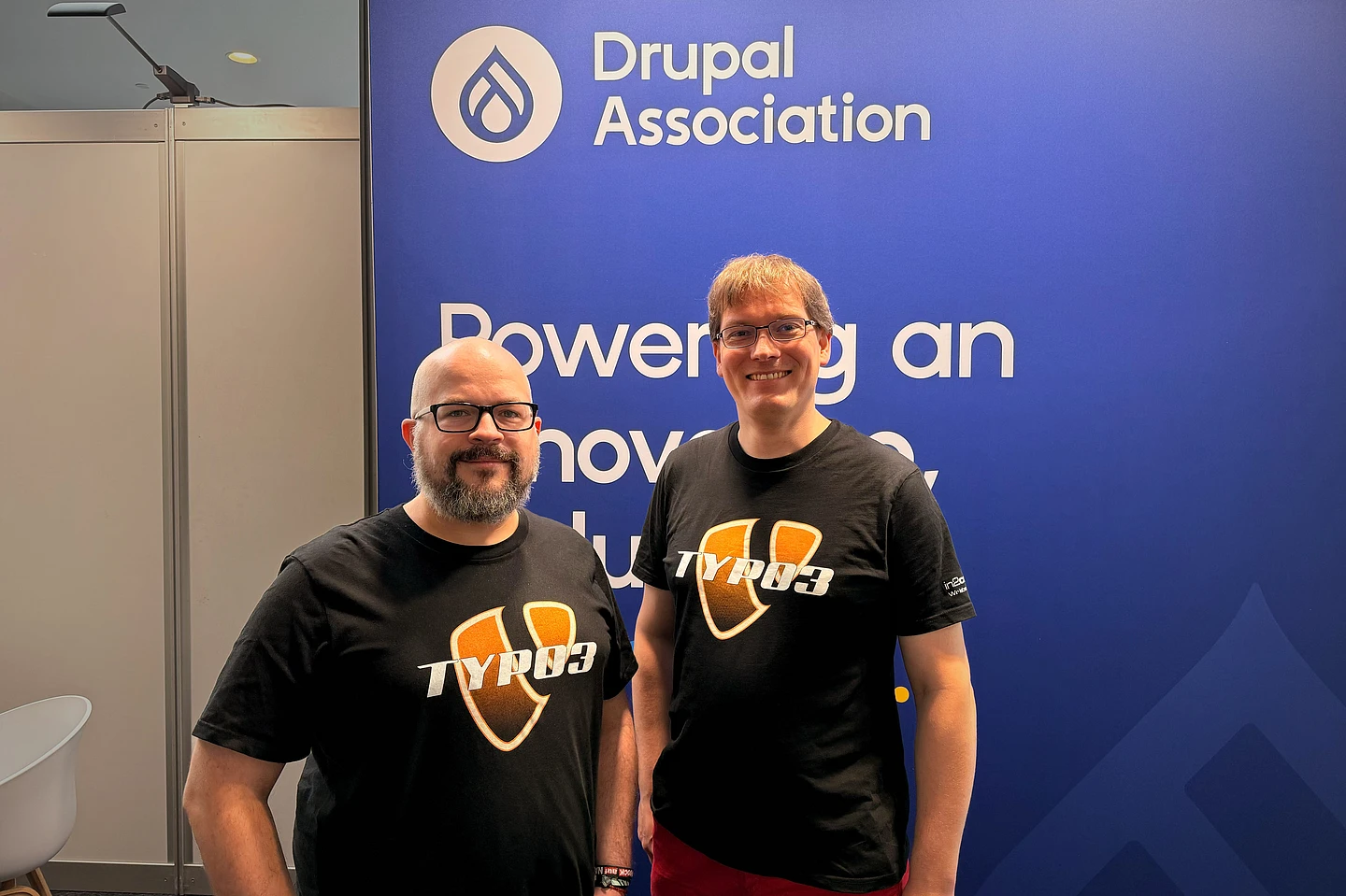
DrupalCon Rotterdam 2026 ran from 28 September to 1 October at the Postillion Hotel & Convention Centre WTC in Rotterdam, Netherlands. Organized by the Drupal Association, it opened with a day of five vertical summits, then two days of sessions, and a Contribution Day. I was there as TYPO3 project ambassador, and TYPO3 Association Board secretary Martin Helmich attended too, manning the booth for his employer, TYPO3 partner Mittwald.
The event counted 876 participants from 47 countries. DrupalCon Europe isn't as big as it used to be (maybe 1,300 came to my first), but 236 newcomers is a share of new blood similar to what we see at TYPO3 events, and that's a good sign.
Pretty Websites, but Why This CMS?
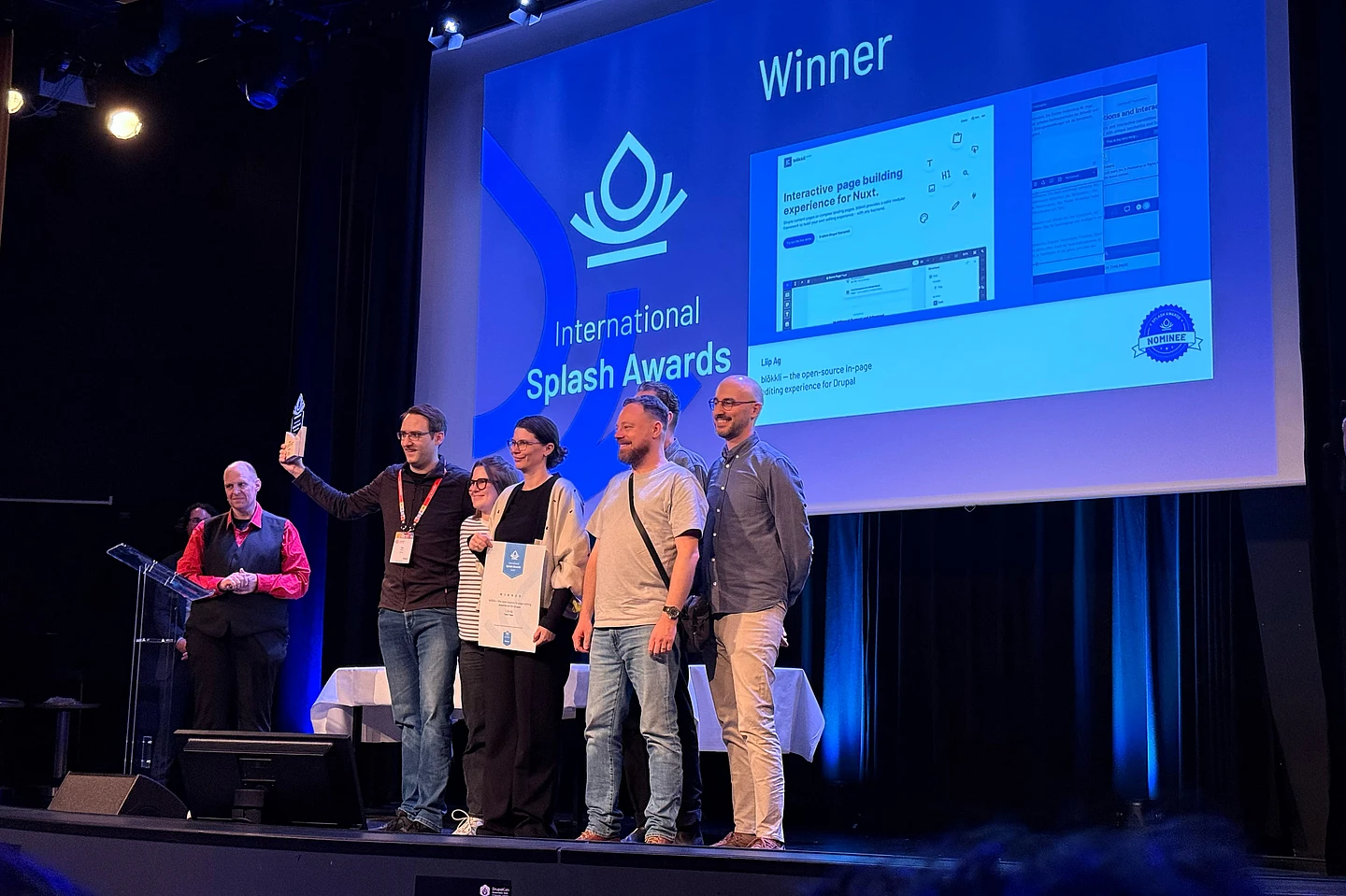
I arrived Monday afternoon and rented a bike, a wonderful thing in a country with no hills anywhere. I used it to ride to the International Splash Awards, held aboard the old ocean liner SS Rotterdam.
The Splash Awards are less black-tie than our TYPO3 Awards, and much shorter, but share a similar problem: You mostly see screenshots of beautiful websites without really understanding what made the site a particularly good fit for Drupal, or in our case TYPO3.
Leap Ahead or Look First
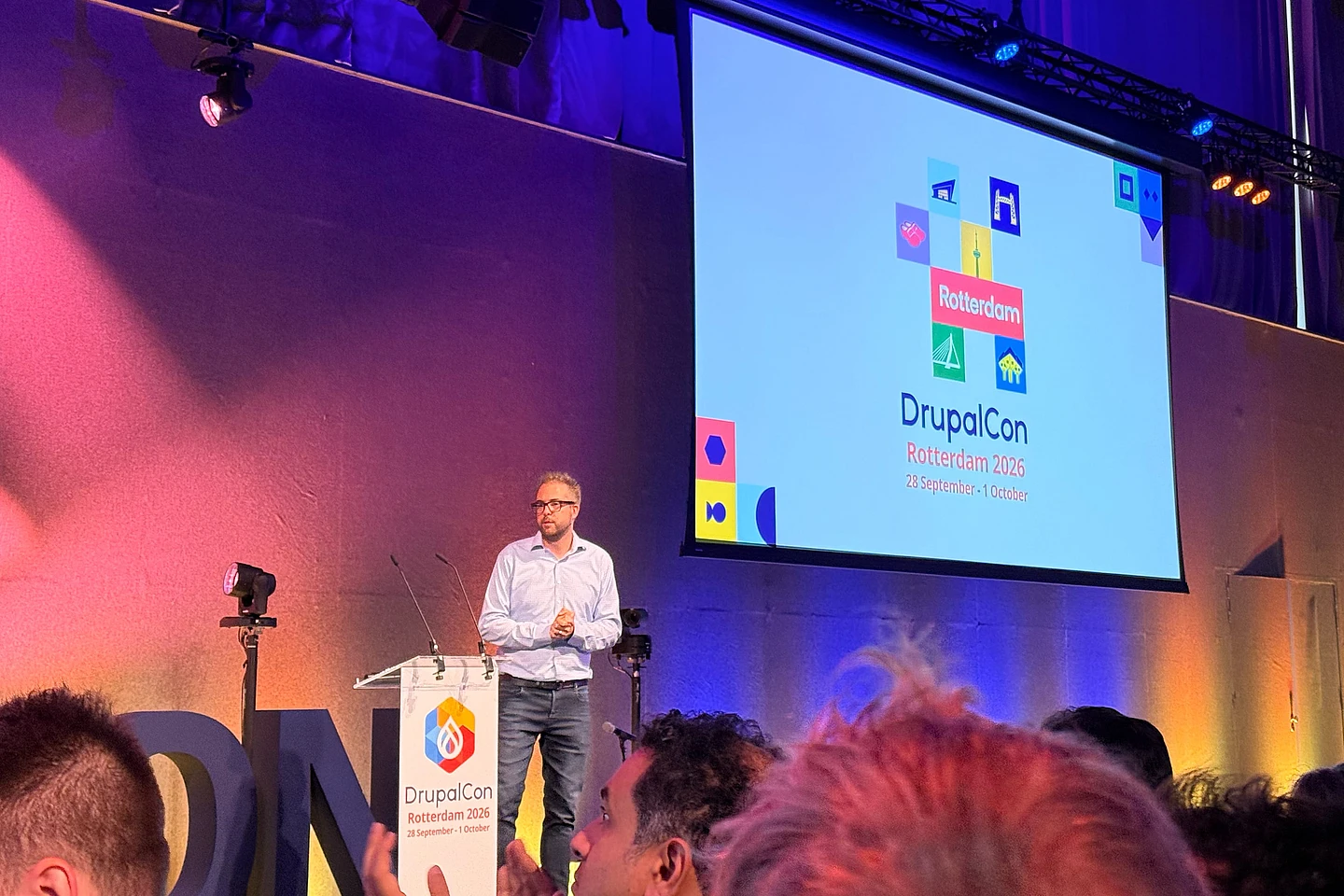
Next morning came the Driesnote, with Drupal founder Dries Buytaert. Drupal Starshot, which I last wrote about from DrupalCon Portland 2024, has become Drupal CMS. It's an AI-focused layer on top of Drupal Core, built for a quick start, where AI can change configuration in the live system, not just content. It is an intriguing product and also an example of where Drupal has a different focus. I think many TYPO3 people would balk at the idea of publishing a website without write-protecting the configuration files.
A Rotterdam saying framed the talk: “Niet lullen maar poetsen,” roughly “no talking, get working.” Drupal has lived by it with Drupal CMS, letting bleeding-edge contributions skip the red tape of core development. Maybe Drupal pushes the envelope a little too far, and maybe TYPO3 waits a little too long before trying new things.
Old Search Results for Up-to-Date Software
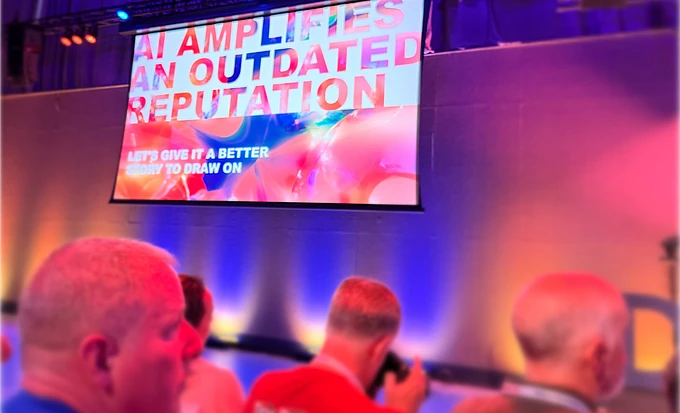
Then Dries flipped the saying. Drupal has taken that advice almost too well, he argued: the work is done, and now it's time to talk. “Our reputation gap is our number one challenge,” he said.
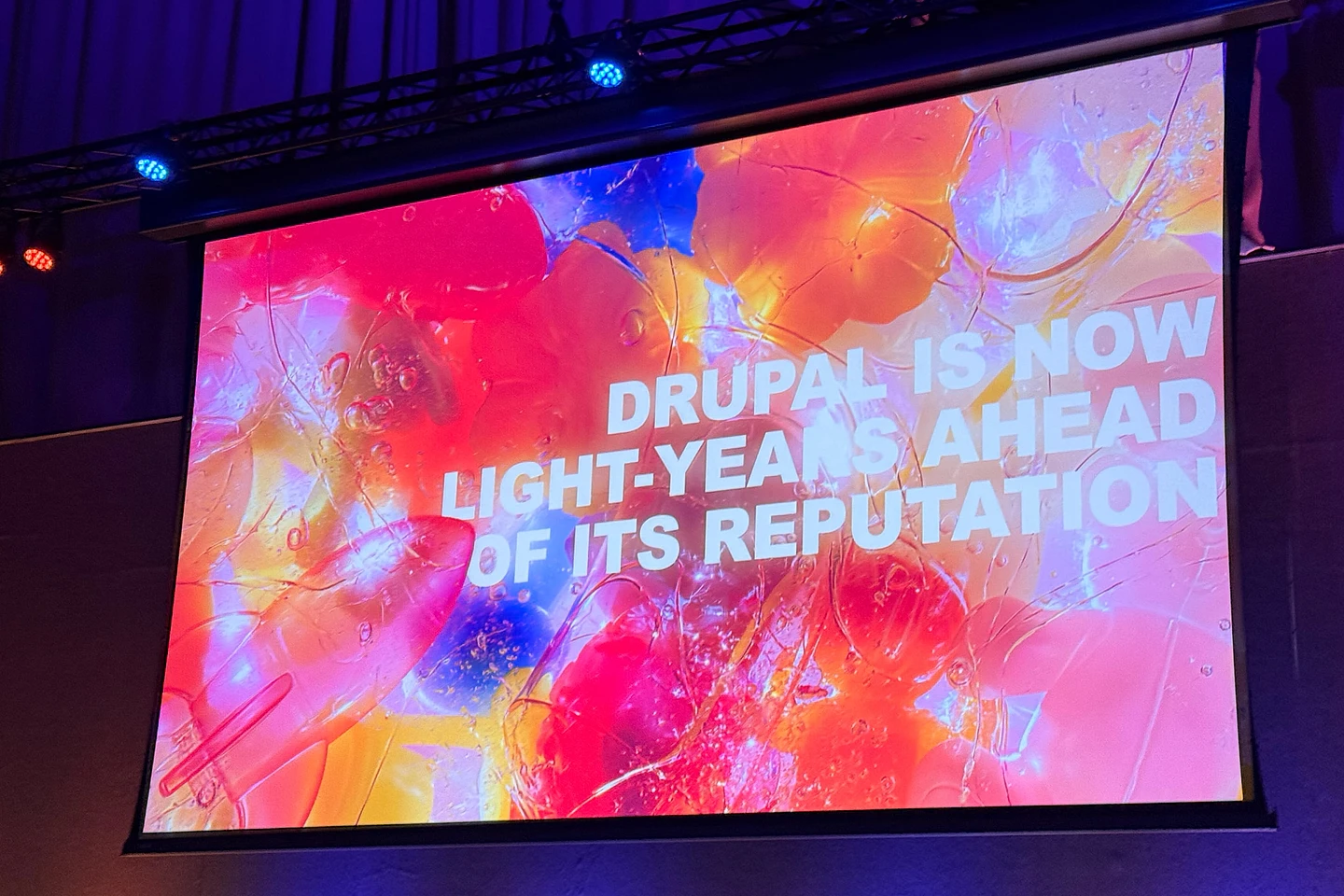
AI amplifies outdated reputations, resurfacing expired experiences from fifteen years ago. Drupal, Dries said, is now light-years ahead of its reputation. That's true for TYPO3 too. The impressions people sit with are a decade, maybe decades, old.
We've become good at showing up outside our bubble. I've counted more than 40 non-TYPO3 events with TYPO3 present in 2026, and I think Drupal has been inspired by that: Dries announced a new Drupal advocacy initiative to get people writing and talking about Drupal.
We can learn back: write up camp talks, turn presentations into tutorials, and host workshops at third-party events. Drupal already makes contributions visible with weighted contribution credits that count issue work and contributor roles alongside money. We really need a way of visualizing volunteer hours like that.
One Theme Out, One Theme In
A later talk, The Case for Drupal CMS, held almost shocking news to someone like me: Drupal only now lets the user interface and the content speak different languages at the same time. In TYPO3, editors have been able to write content in one language, while the backend spoke another, for as long as anyone can remember.
On themes, we're heading in opposite directions. Drupal Core v12 will ship without a default front-end theme, just as we were celebrating that TYPO3 v14 finally put one back in. However, Drupal CMS fills the gap with a little marketplace of very nicely designed themes.

Nobody Builds a Hobby Project on an Enterprise CMS
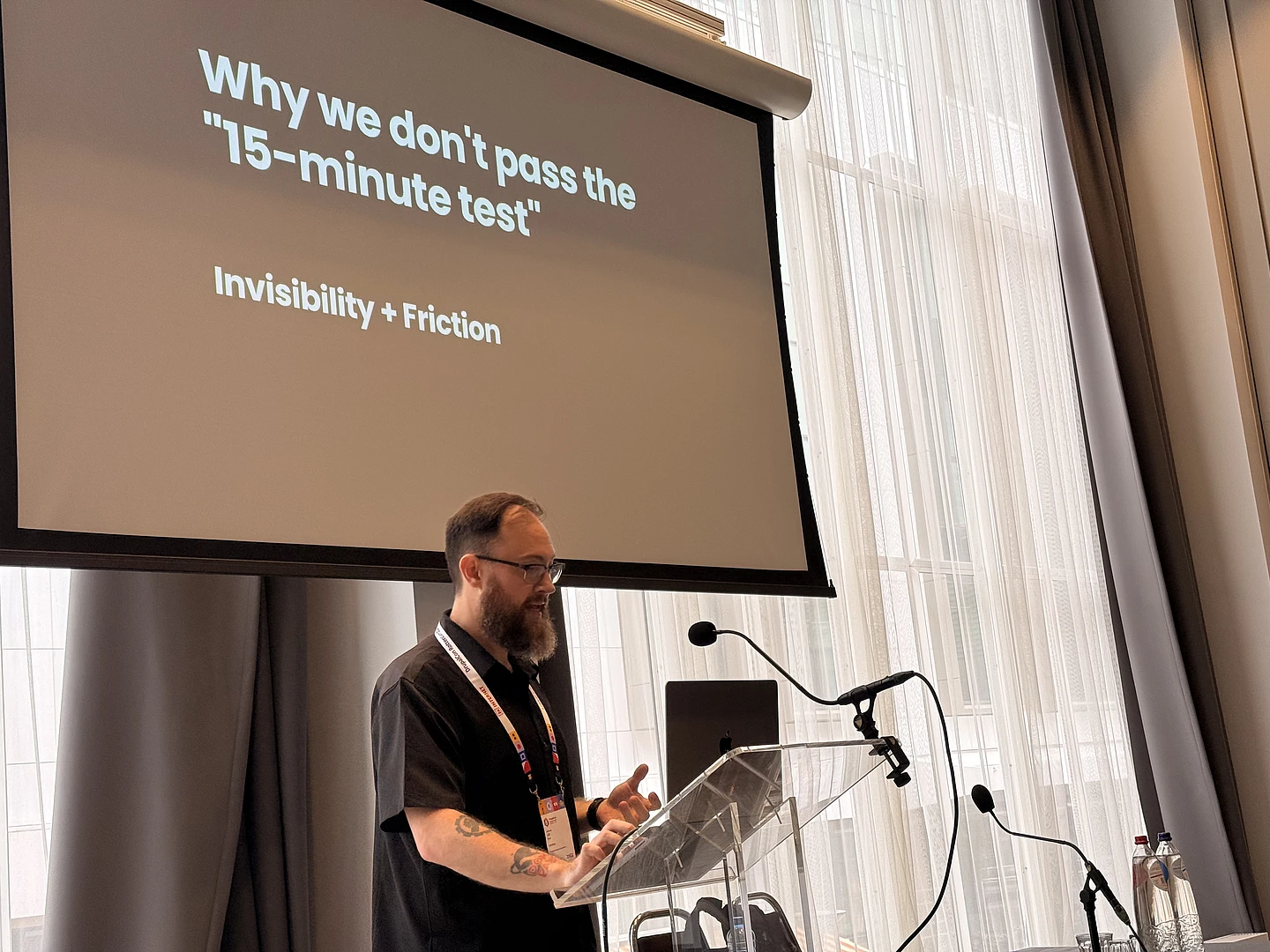
I went into J.D. Flynn's talk Why Developers Don't Choose Drupal rather expectant, because developers rarely choose TYPO3 either, unless asked. Both get picked for boring reasons like enterprise security and governance. Both are good reasons for adoption, but not for attracting young developers. J.D. named a desire gap, an invisibility crisis, and a 15-minute test: if you can't do something cool in 15 minutes, you've lost.
The fixes:
- Ship a five-minute video.
- Post on Reddit or Dev.to.
- Show a screenshot instead of saying “trust me.”
- Make documentation AI-friendly.
- Build something weird.
TYPO3 does well on most, and Lina Wolf's recent Markdown versions of our documentation help a lot with AI. But on building something weird — or surprising — or cool — we're as far behind as Drupal. Maybe we should build a game with TYPO3, or set up competitions encouraging weird and cool over traditional and boring?
Getting the Facts Straight About Each Other
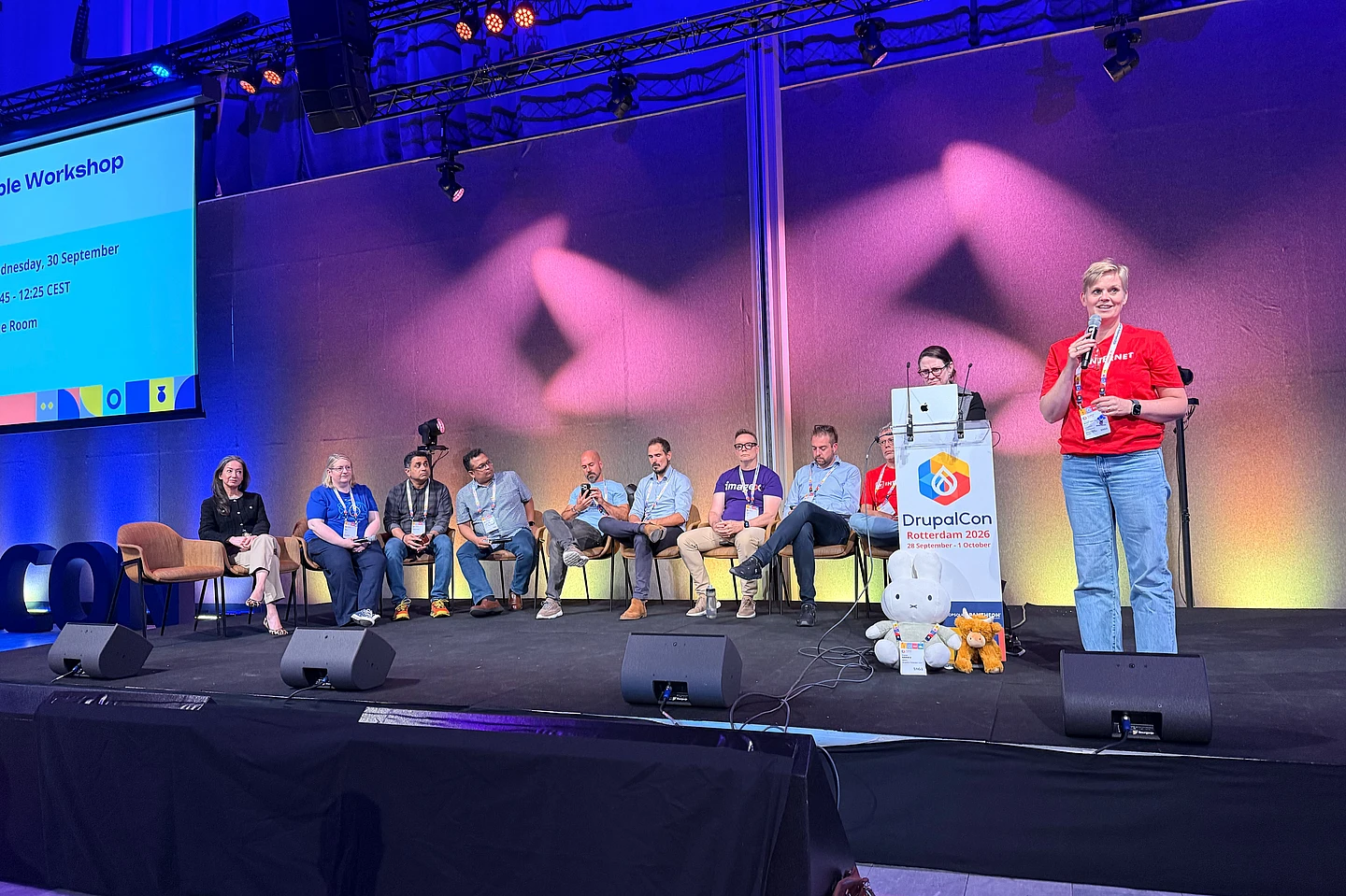
The Drupal Association holds public board meetings at DrupalCon, and I think that's a good idea. Sitting in on this one, I recognized many of the same challenges as those we see in TYPO3. Our projects already collaborate through the Open Website Alliance (with Joomla and WordPress), and we need to talk more about governance best practice and the challenges of open source financing — so let’s stop talking and get working.
Though Drupal and TYPO3 are similar in many ways, we’re also increasingly differentiating our products: Drupal reaches for marketers wanting easy installs, TYPO3 for enterprises leaving proprietary solutions.
Some people I met mentioned things about TYPO3 that were patently wrong, and I'm sure we believe untrue things about Drupal, too. So I talked with the Drupal Association about getting help to verify the TYPO3 Marketing Team's upcoming Drupal vs. TYPO3 comparison card for the benefit of both our communities.
The Crazy Team Takes Its Penalties
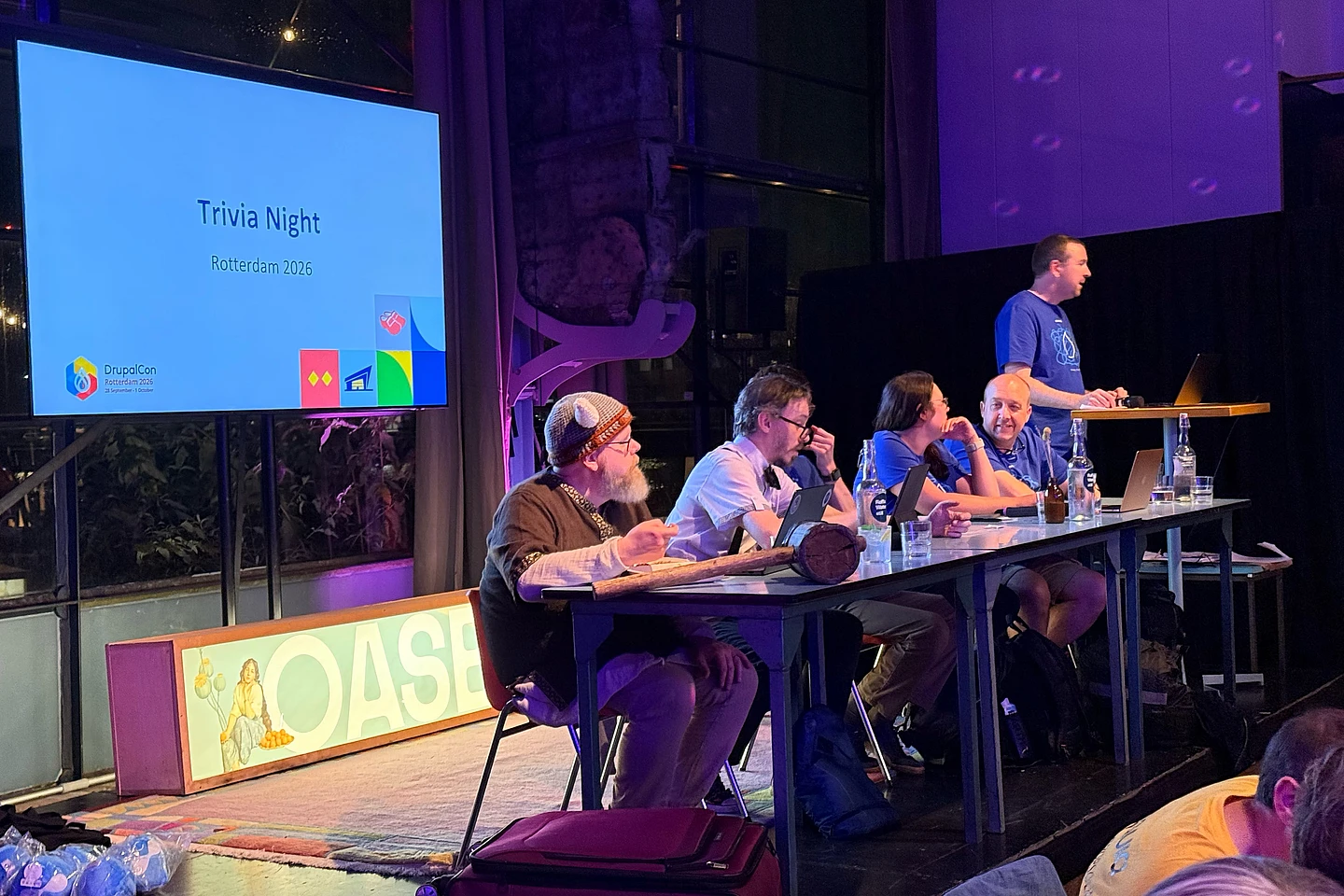
On the last evening, I joined my first Drupal trivia night with a Dutchman, a Canadian, and two other Norwegians. As team number one, we knew we had already won. Since I wasn’t even from the Drupal community, we declared six newcomers, hoping for bonus points. Since only five people are allowed per team, we promptly received five minus points instead.
Bribing the jury is allowed and encouraged, but complaining that someone kept bribing it the same way as previous years cost us another five points. I loved protesting, tongue in cheek, when our answer that 60% of the Netherlands is below sea level was marked wrong: it's 26% by area, but I insisted we'd meant by volume.
We finished second-to-last with 14 points. The losing team had 16 points. It was crazy and utterly fun.
Where Newcomers Get Merged
I had to go home before Contribution Day, but I know it’s a great experience. Where TYPO3 Developer Days has a contribution night, Drupal dedicates a whole day to curated issues, help from core team members, and getting your newbie patch merged into core on-stage as a finale. A point of inspiration.
I love good conversations! Thanks to the great people of the hallway track, and to the speakers, who gave me much to think about. There is real meaning in being inspired by other open-source projects, and I know they are being inspired by us, too.
Do you have a talk from a TYPO3 camp that deserves a wider audience? The Content Group can help you turn it into an article.
