
TYPO3 v14 LTS—The Next Generation
Today, we are thrilled to announce TYPO3 v14 LTS, our latest flagship release and a major milestone in TYPO3's evolution. This new era begins with a redesigned and greatly enhanced backend user interface, complemented by innovative features, improvements, and modern technologies.

Introduction
After just three sprint releases between November 2025 and March 2026, TYPO3 v14 LTS reinforces its position as a leading player in the open-source enterprise CMS landscape.
The backend has been redefined with bold, high-impact design updates that transform the entire user experience. Alongside a stunning frontend theme out of the box, you also get powerful new backend modules for generating QR codes and short URLs in seconds. The newly introduced context panel takes page and content editing to the next level, while the modernized interface now features a dynamic page creation wizard that removes friction at every step. Combined with major enhancements to the Form Framework and extensive optimizations under the hood, this release meets everyone's expectation—editors, integrators, developers alike.
As a long-term support release, TYPO3 v14 LTS will receive bug fixes until 31 December 2027, and security patches until 30 June 2029. That’s more than three years of peace of mind for free!
Let’s take a closer look at the most important enhancements included in the new release. For deeper technical insights, please refer to the detailed TYPO3 v14 changelog.
The TYPO3 Backend Redefined
Love at the first login
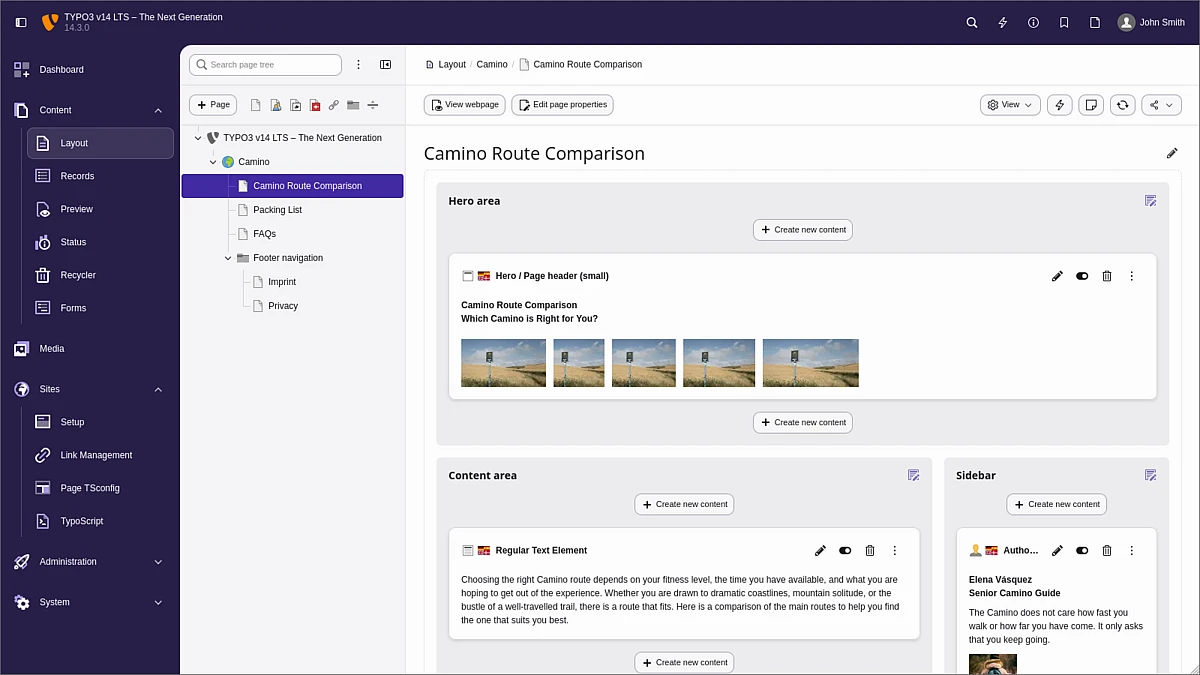
With TYPO3 v14 LTS, the backend introduces a refreshed, modern interface with a clear focus on improving usability and consistency that feels more intuitive right from the start. Navigation has been simplified, terminology is more consistent, and the overall look and feel is contemporary, clean, and polished.
The top bar now features a new unified scheme that aligns with the module menu on the left. You will also notice updated icons and subtle design improvements, such as rounded corners, that give the interface a modern appearance.
A lot of attention has gone into reviewing the names of modules. Each one has been carefully evaluated against its actual purpose, while also taking into account terminology commonly used in other content management and digital asset management systems. This has led to a clearer structure, with modules renamed and regrouped in a way that makes their function easier to understand. The left-hand menu reflects these changes and offers a more logical and streamlined experience.
The document header, also known as the DocHeader, has been redesigned to create a more consistent experience across all backend modules. It now features a clean layout with breadcrumb navigation and a unified language selector for installations that support multiple languages. The breadcrumb is interactive and responsive, making it easier to move between levels. A second row provides quick access to common actions through dropdowns and buttons such as save, close, reload, and bookmark.
If you have been working with TYPO3 for a while, the updated structure and naming might take a little getting used to. However, the improvements quickly start to feel natural and help create a smoother, more efficient workflow for both experienced and new users.
Context Panel
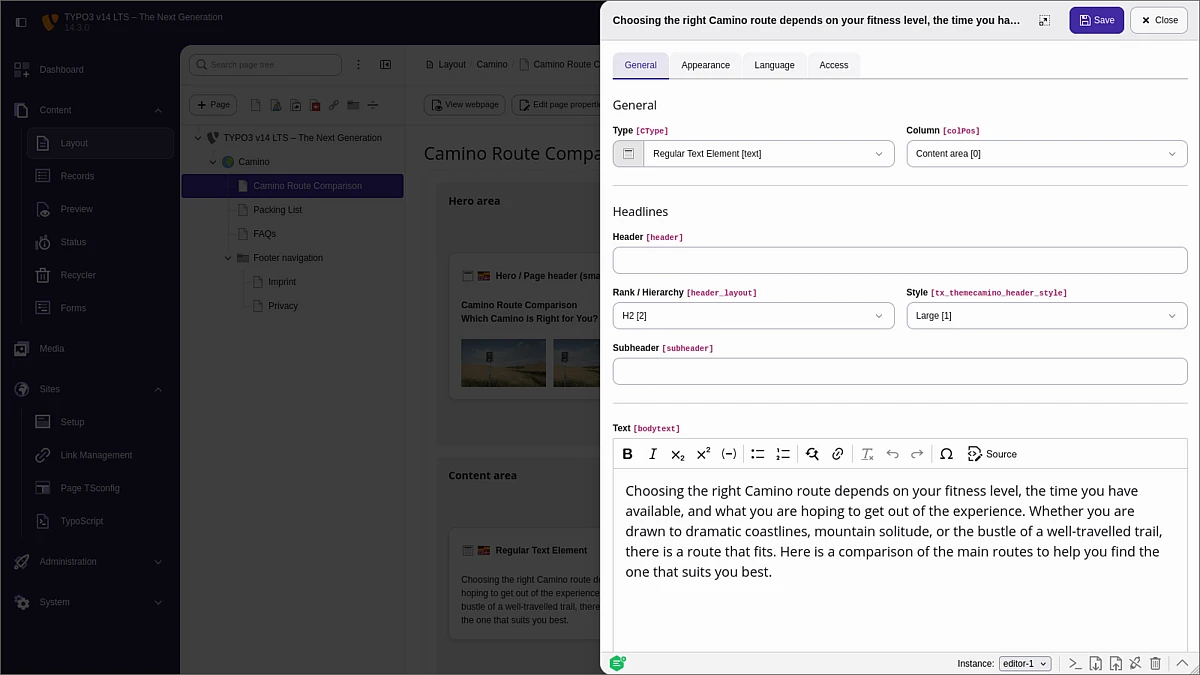
Content editing and page configuration have also been significantly improved. Instead of reloading the entire content area, a context panel now slides in from the right whenever you edit a content element or adjust page properties. The form opens within this panel while the page layout stays visible in the background. This keeps you oriented, reduces unnecessary navigation, and makes everyday editing faster and more efficient.
Guided Page Creation and Scheduler Tasks
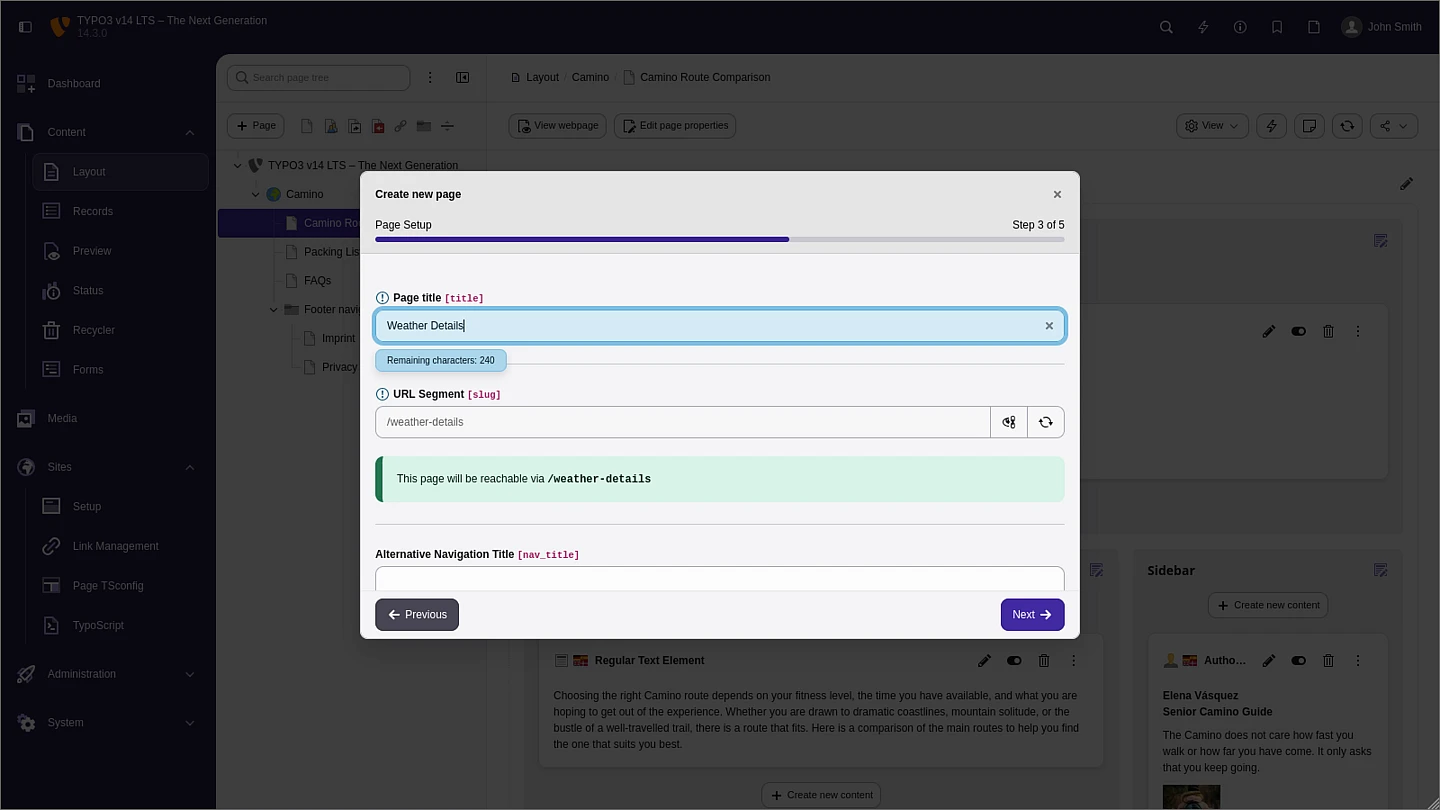
Creating new pages in TYPO3 14 LTS is now more intuitive and straightforward, thanks to an improved page creation wizard that guides editors step by step through the process. All relevant input fields stay visible throughout the process, which makes it easier to complete the setup with confidence and reduces the risk of missing important information.
There is also a new wizard for creating Scheduler tasks, designed to make the process faster and easier to understand. It features a modern, categorized interface similar to the content element wizard in TYPO3. Tasks are organized by extension or category, making them easier to find. Administrators can search and filter available tasks, and each option is clearly presented with icons, titles, and descriptions.
Centralized Bookmark Manager
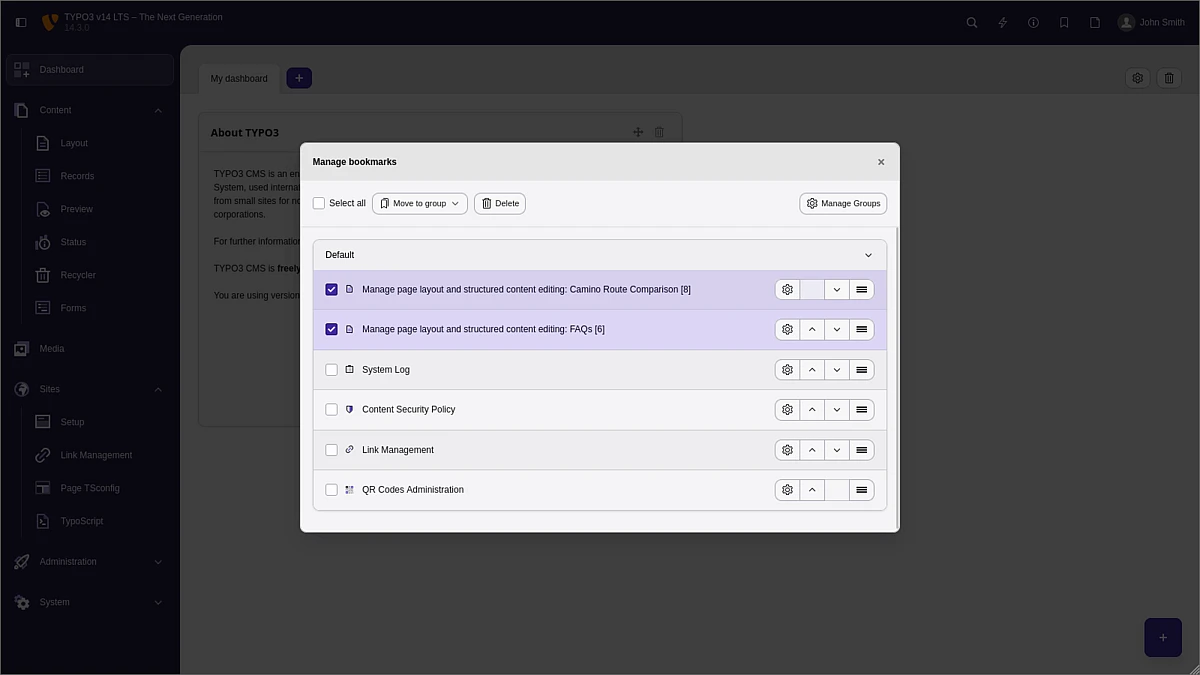
Bookmarks, previously known as shortcuts, continue to be a valuable feature, especially in large TYPO3 installations with complex page trees.
In TYPO3 v14 LTS, the bookmark toolbar item opens a dropdown with quick access to recent bookmarks, along with a link to the new Bookmark Manager. Users can organize bookmarks into groups, and administrators can define global bookmarks that are available to everyone.
Backend users can manage their own set of bookmarks, allowing them to tailor the interface to their specific roles and responsibilities. For tasks that are performed regularly, such as updating a news section, having direct entry points saves time and reduces navigation errors.
Camino: Your Express Lane to the Web
While TYPO3’s backend is ready to use right after installation, the frontend still needs to be built separately. For newcomers, this often adds a layer of complexity, as creating a theme from scratch requires a solid understanding of TYPO3’s architecture and typically takes time to get right.
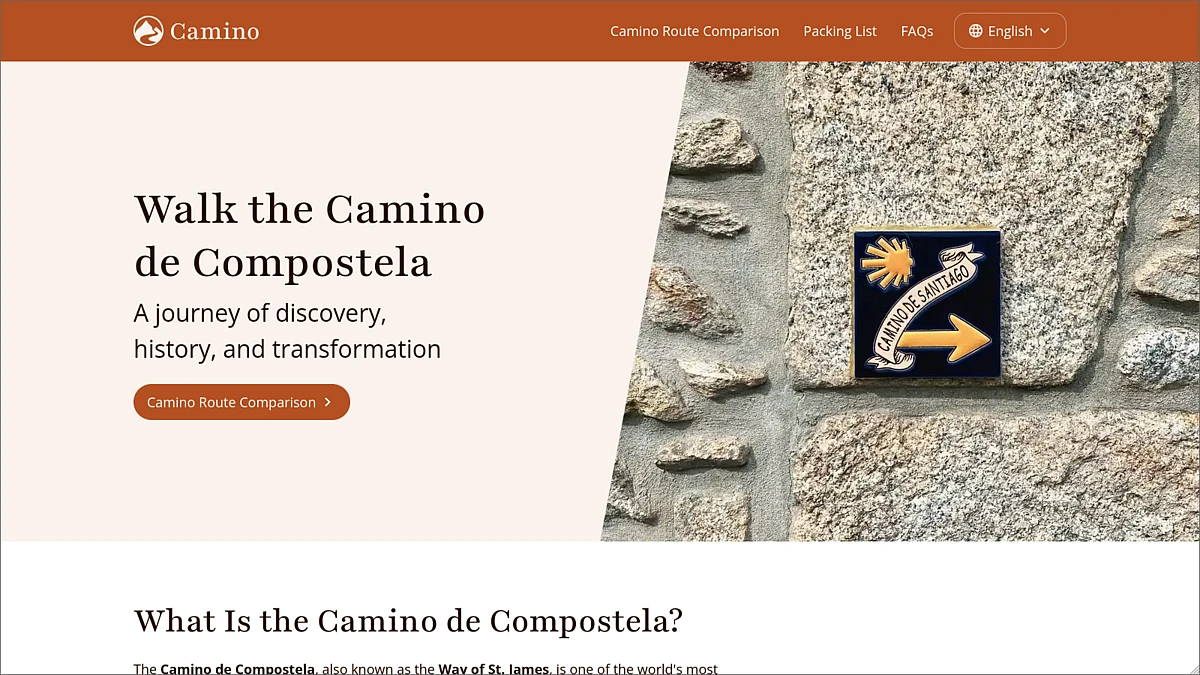
With TYPO3 v14 LTS, this process becomes much more approachable. The system now includes a ready-to-use default theme called Camino, designed to help integrators launch new websites in a matter of minutes. Instead of starting with a blank slate, you get a clean, functional foundation that demonstrates how a modern TYPO3 site can be structured.
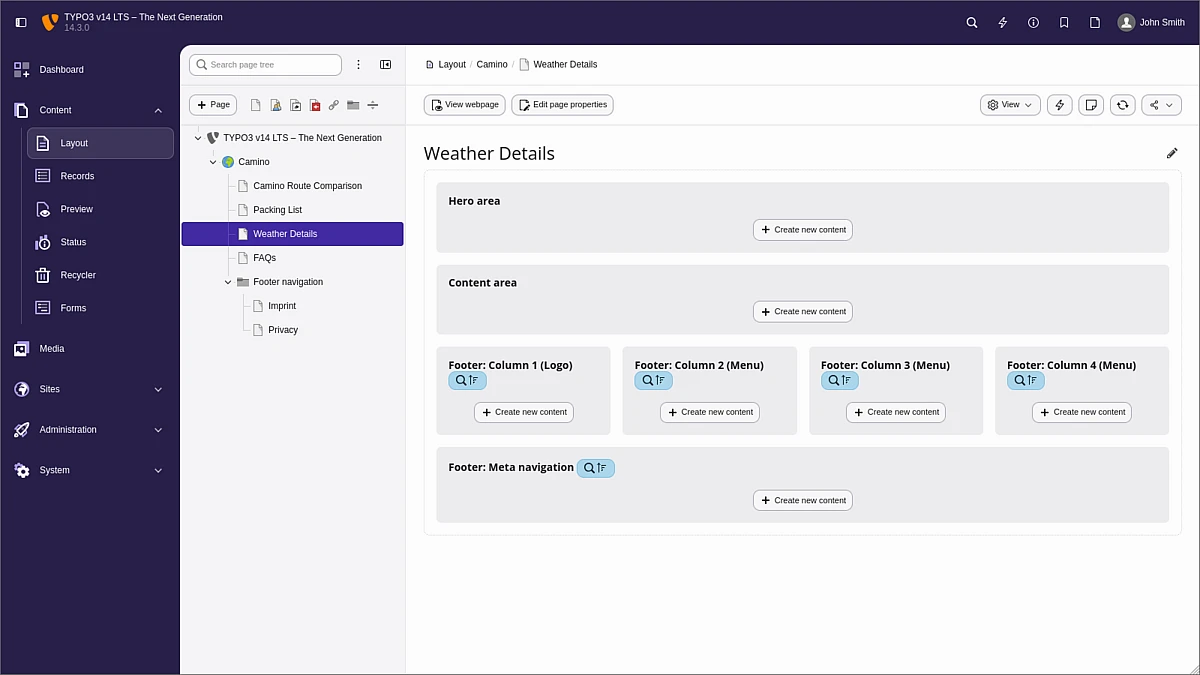
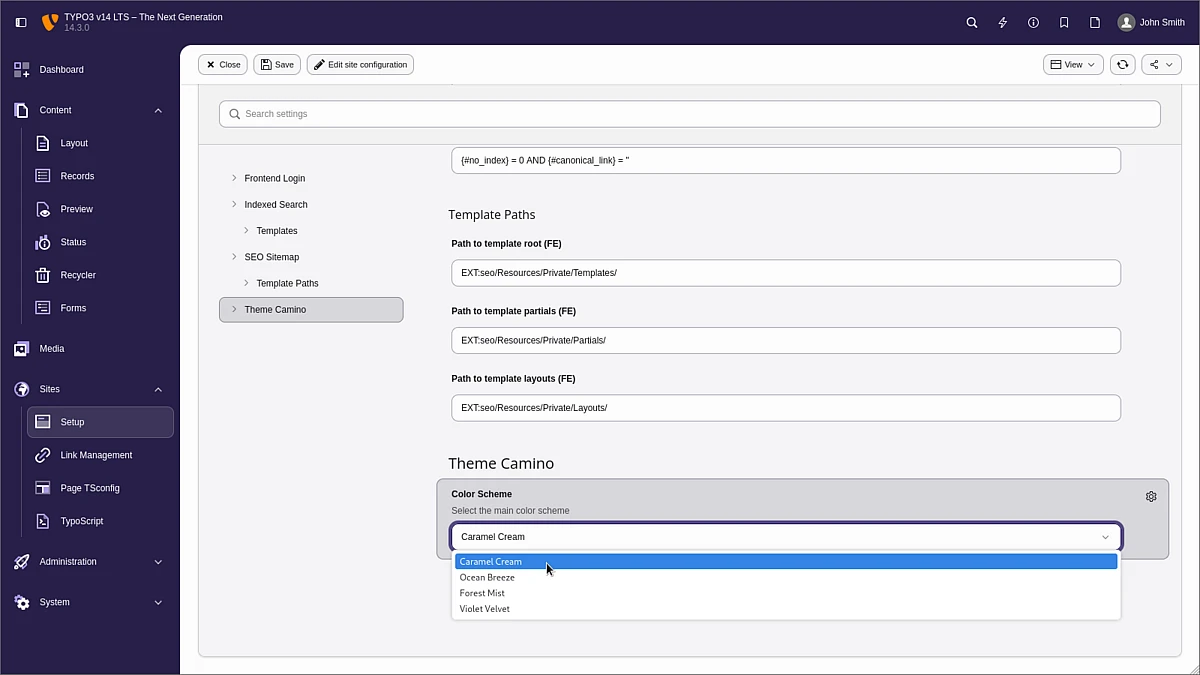
Camino is fully self-contained and does not rely on third-party dependencies. It showcases TYPO3’s native page structure and content elements, without depending on Fluid Styled Content. This makes it a great reference point for best practices, while still being practical for real-world projects. At the same time, it is flexible enough to adapt to different needs, with simple options for customization such as multiple color schemes and configurable navigation and footer layouts.
The theme is delivered as an optional system extension, which means it stays neatly encapsulated and does not interfere with existing projects when upgrading to TYPO3 v14 LTS. For new installations, Camino is enabled by default, giving you a polished frontend out of the box. In existing environments, integrators can activate it for new sites whenever it fits their workflow.
Since its introduction in the TYPO3 v14.1 sprint release in January 2026, Camino has already been adopted by a growing number of TYPO3 projects in production. This early uptake shows that having a solid, ready-made starting point is not just convenient, but genuinely valuable for both new users and experienced integrators who want to move faster without compromising on quality.
New Backend Modules
QR Codes
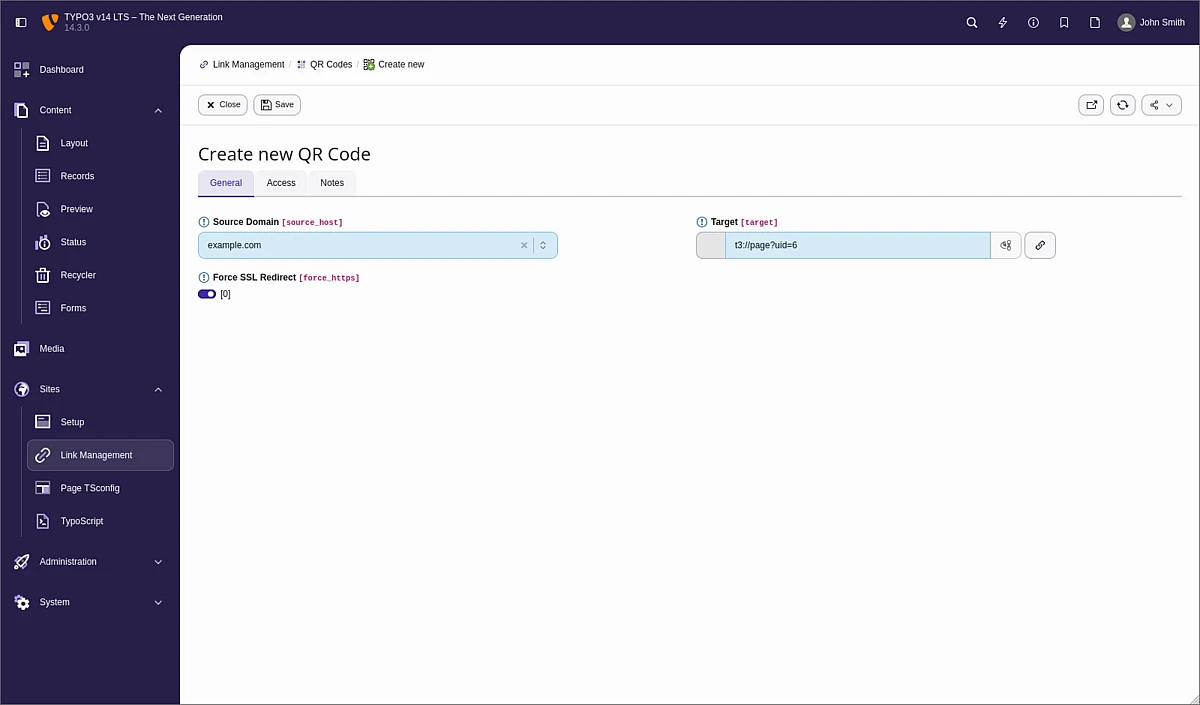
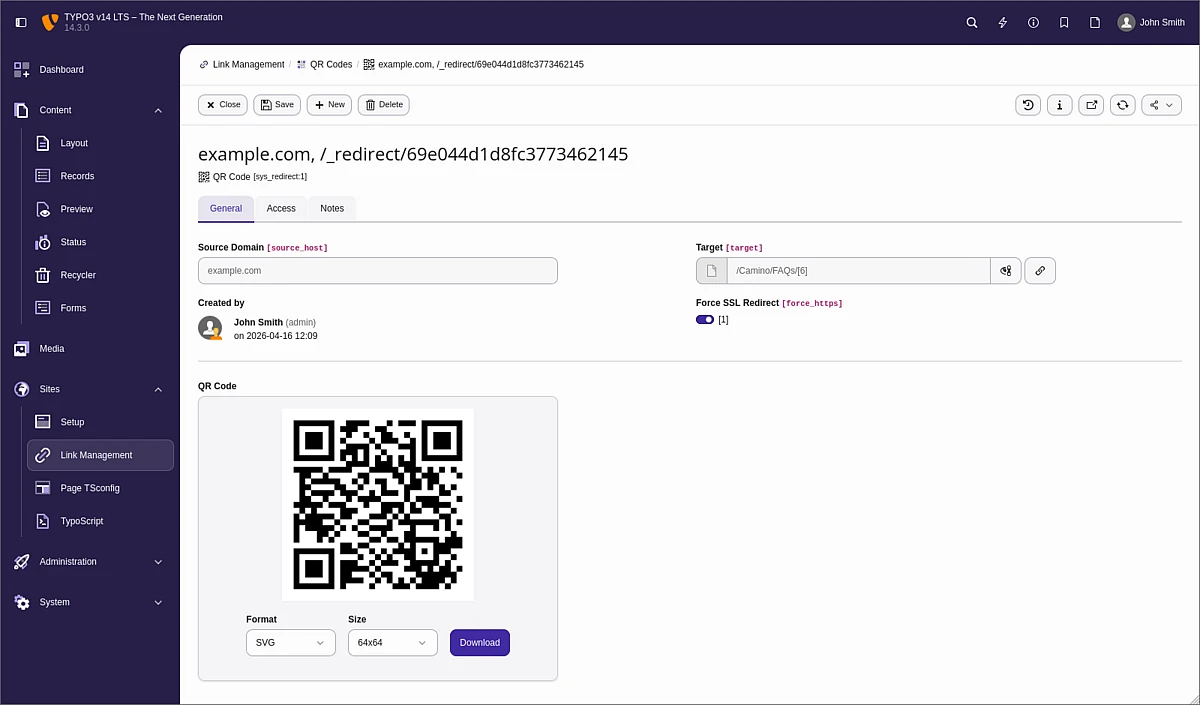
TYPO3 now includes a dedicated backend module that makes it easy for editors to generate QR codes for unique, persistent URLs. These QR codes can be linked to specific pages within your TYPO3 project and reassigned at any time, giving you full control over where they lead.
The real advantage is flexibility. The QR code itself never changes, but the destination behind it can be updated whenever needed. This means you can adjust campaigns, refresh content, or redirect users without reprinting materials. Printed assets such as flyers, posters, or booth displays remain valid long after production, saving both time and cost.
Behind the scenes, QR code records are built on TYPO3’s redirect system. This gives you access to proven features such as hit counters, enforced SSL, optional expiry dates, and other management tools that help you stay in control.
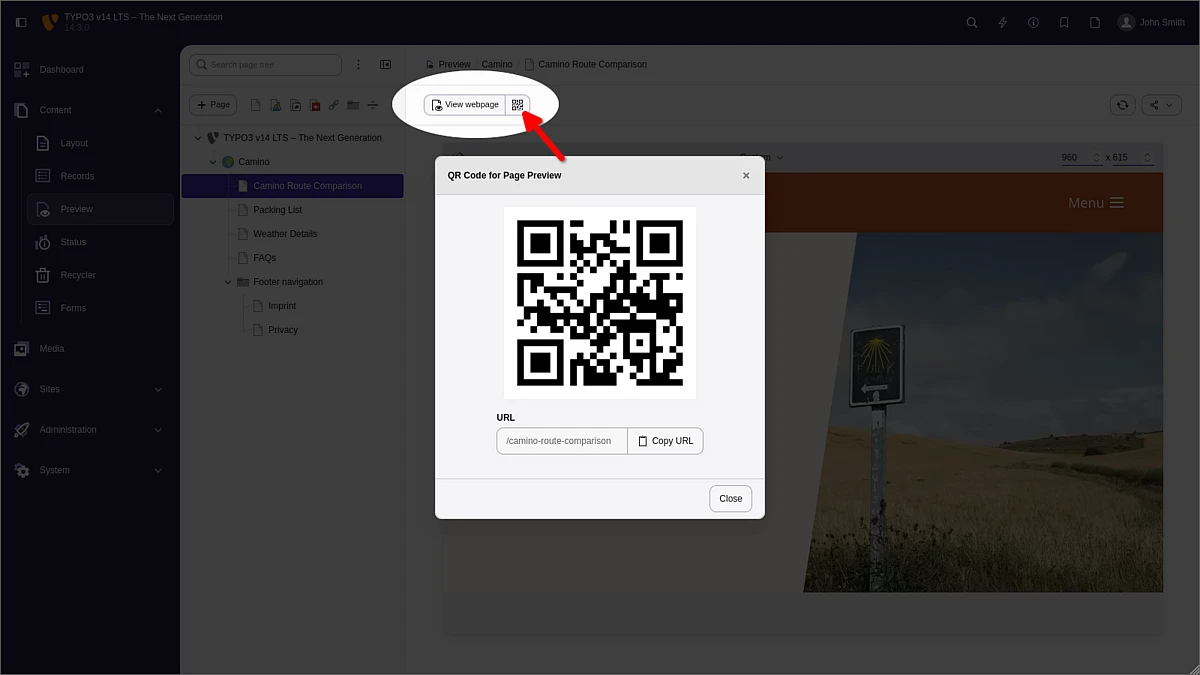
QR codes are also integrated directly into the backend interface. In many modules, you will find a QR code button next to the View button. With a single click, a modal opens showing a scannable QR code.
This is especially useful when sharing page links or workspace previews with colleagues or clients.
Short URLs
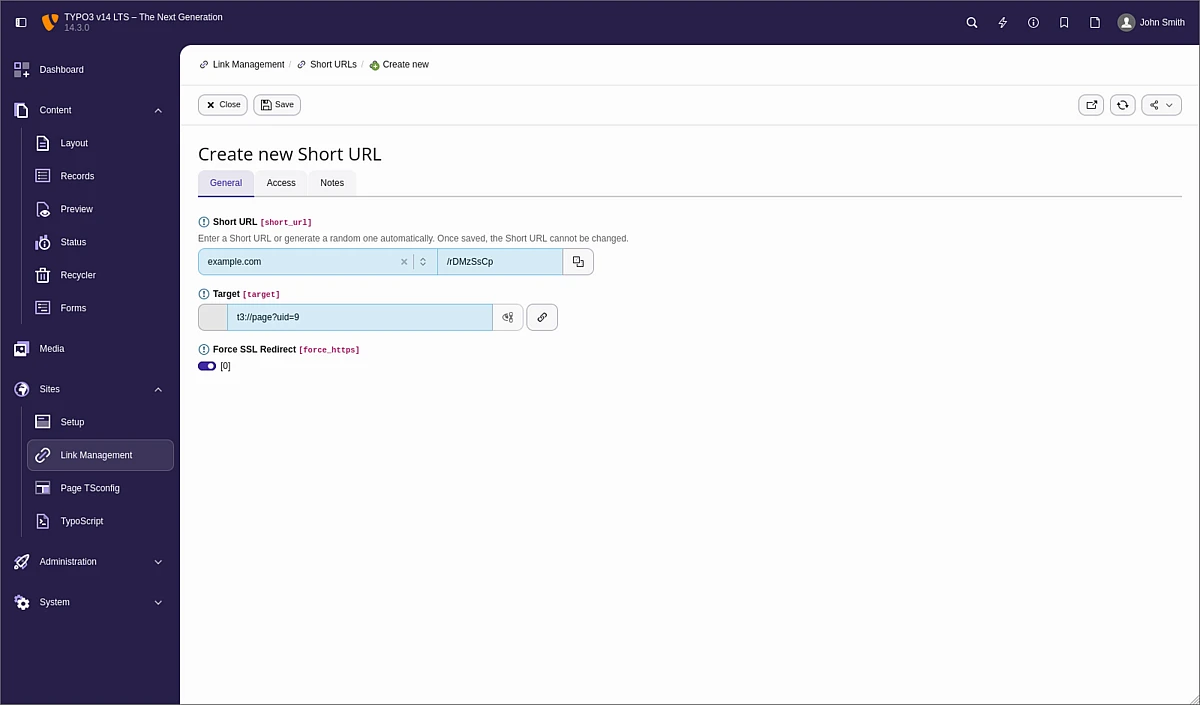
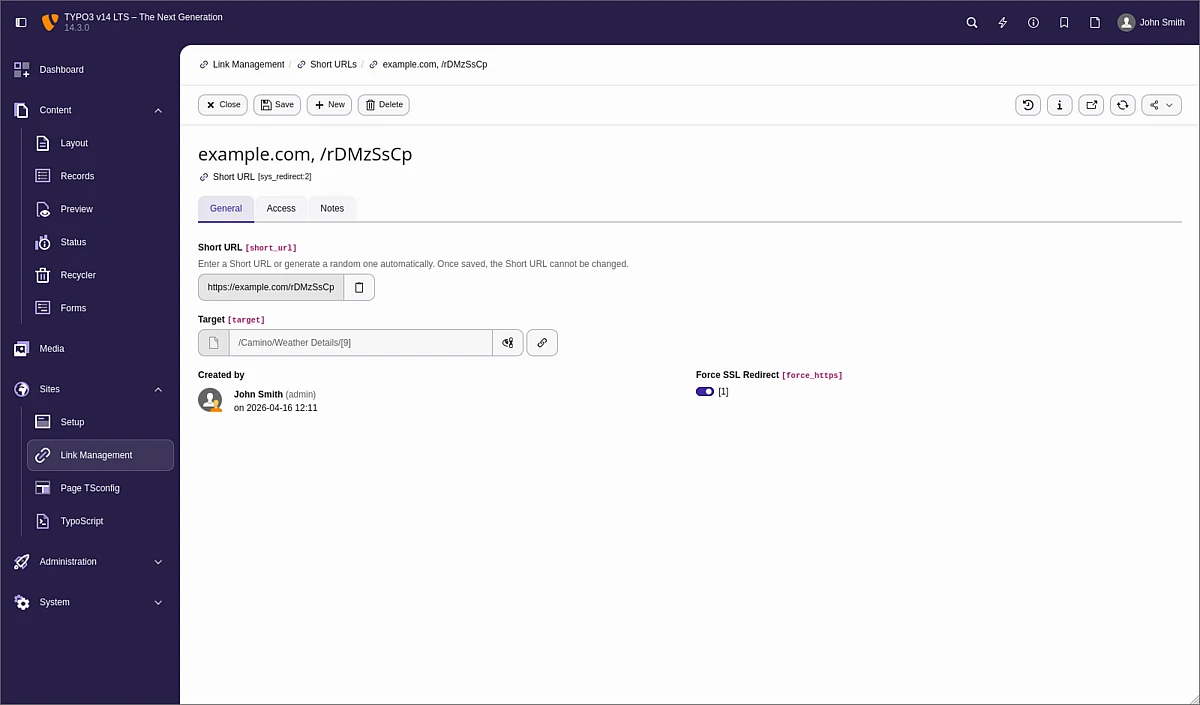
TYPO3 v14 LTS also introduces a dedicated module for creating and managing short URLs, designed with marketing teams in mind. It offers a simple and efficient way to generate clean, memorable links that point to specific pages.
Once a short URL is created, it remains stable and reliable. Built-in safeguards prevent duplicates and accidental changes, so you can confidently use these links in campaigns, presentations, or printed materials.
Short URLs come with the same powerful options as QR codes, including hit counters, enforced SSL, and configurable expiry dates. This gives you the tools to track performance and manage campaigns with precision.
Content Type Usage Report
Understanding how content is used across a site is essential for keeping a TYPO3 project efficient and maintainable. Administrators and developers often need to identify unused content element types or see which fields are actively in use. These insights help reduce complexity and keep systems clean.
The new reporting module provides exactly this kind of visibility. It offers a clear overview of all content element types and shows how frequently each one is used across the site. Summaries by type make it easy to spot trends and identify opportunities for optimization.
Dashboard Widgets
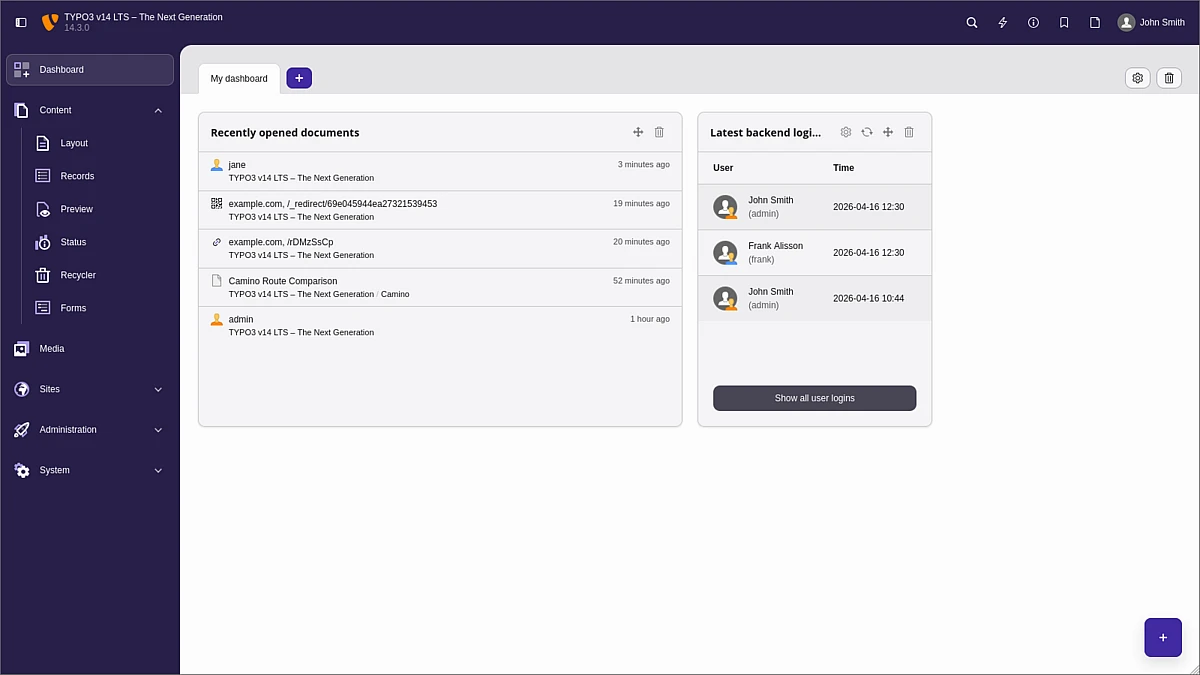
TYPO3 v14 LTS also brings two new dashboard widgets that help you stay on top of your daily work without extra effort.
One of the widgets shows the most recent backend user logins directly in the dashboard. This gives administrators a quick and clear overview of who has accessed the system and when, without needing to dig into the system log. Each entry includes the user’s avatar, name, and login time, making it easy to spot activity at a glance.
Another handy addition is the “Recently Opened Documents” widget. It keeps track of the pages and records you are currently working on or have accessed recently. This makes it simple to jump back into your work and continue where you left off, without navigating through the page tree or running a search.
Both widgets are fully customizable, so backend users can tailor their dashboard to match their workflow and focus on the information that matters most.
Form Framework
Forms are a core part of any website, providing a structured way to collect input from visitors through surveys, contact requests, and feedback forms.
With TYPO3 14 LTS, the Form Framework takes a significant step forward, introducing a range of practical improvements for both editors and integrators. File handling becomes much more flexible, as multiple uploads can now be managed within a single field. At the same time, email notifications are easier to customize directly in the backend, giving editors more control without requiring technical expertise.
Editing text fields in forms also gets a boost with CKEditor 5 support, enabling rich formatting and a more consistent experience across the TYPO3 backend. The form editor itself feels faster and more intuitive thanks to its modern Web Components architecture, with added features such as search and improved navigation.
Behind the scenes, form definition storage also evolved. YAML-based storage is being phased out in favour of a database-driven approach, offering greater flexibility through the new database storage adapter that supports multiple storage options. Migration is straightforward with a dedicated CLI command that helps move existing definitions efficiently.
Additional enhancements include improved localization with ICU message format support, better date handling, and a new cleanup command to manage uploaded files and keep installations tidy.
The Next Generation of Fluid
Fluid, TYPO3’s trusted template engine, continues to evolve in TYPO3 v14 LTS with the integration of Fluid version 5.3.
Working with templates is now more flexible than ever. The requirement for uppercase file names has been removed, and Fluid introduces a smart fallback mechanism that resolves templates more intuitively. This change also opens the door for optional, more explicit file extensions such as .fluid.html or .fluid.txt while remaining fully compatible with existing setups.
Handling inline CSS and JavaScript becomes much easier with full CDATA support. Developers can now include raw styles and scripts without running into conflicts with Fluid syntax, while still retaining the ability to use variables and ViewHelpers where needed.
TYPO3 v14 LTS also expands Fluid’s capabilities with a set of new ViewHelpers, covering use cases such as rendering page metadata, content areas, records, and responsive images. These additions streamline development and provide more flexibility when building templates.
To support quality and maintainability, a new fluid:analyze CLI command helps developers and integrators validate templates and detect potential issues early. It provides a fast and reliable way to ensure your Fluid templates stay clean, up to date, and ready for the future.
Localization and Translation
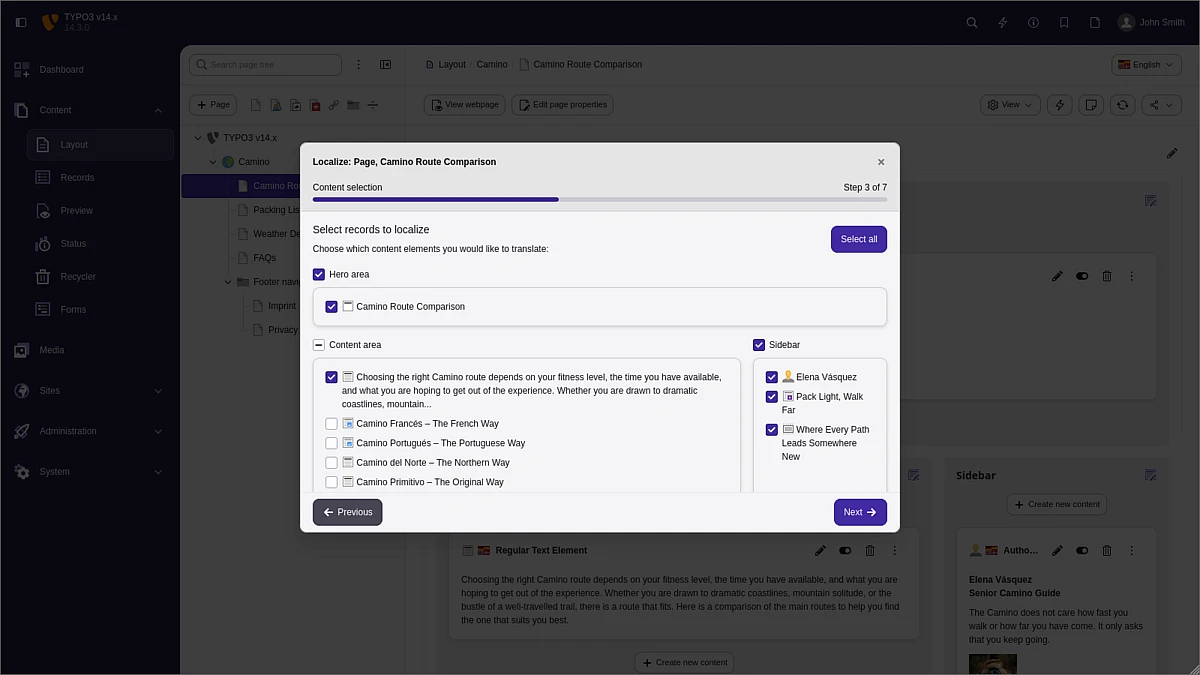
TYPO3 v14 LTS brings a fresh, more intuitive approach to managing multilingual content, making translation workflows easier and more efficient for editors and developers alike.
Guided Translation Workflow
At the heart of this update is a new guided translation wizard that walks editors through each step of the process. No matter where a translation is started in the backend, the same consistent workflow is applied. The wizard focuses only on relevant steps, skipping anything that does not require input, which keeps the experience clear, structured, and easy to follow.
The new system is also highly extensible. Developers can integrate custom localization handlers, including connections to external translation services or AI-powered tools, opening up new possibilities for automation and scalability.
Symfony Translation Component
Under the hood, TYPO3 now uses the Symfony Translation component, bringing a modern and standardized foundation to localization. This upgrade improves how translation files are handled, with support for both XLIFF 1.2 and 2.x formats, and allows developers to implement custom translation loaders using established Symfony practices.
Referencing translations has also become more flexible and consistent. Labels can now be organized into domains, making them easier to manage and reuse. With a concise syntax such as core.form.tabs:general, developers can work more efficiently while keeping projects clean and maintainable.
A Truly Multilingual Backend
TYPO3’s backend user interface is available in multiple languages right out of the box, making it easy for teams around the world to work in their preferred language. Once the relevant language packs are installed, backend users can simply select their desired language in their user settings, ensuring a more intuitive and accessible experience.
The TYPO3 Localization Team reports that several languages already offer close to complete translation coverage for backend labels. These include Arabic, Czech, Danish, Dutch, French, German, Italian, Lao, and Russian. This high level of localization allows editors and administrators to navigate the system efficiently in their native language.
Built Like a Vault, Runs Like a Racer
Let’s take a closer look at some of the key technical improvements in TYPO3 v14 LTS and how they make everyday development smoother and more reliable.
System Resource API
The new System Resource API brings a much-needed level of consistency to how resources are resolved and URLs are generated. Whether you are working with extension files, assets in the File Abstraction Layer (FAL), project files, or external URIs, everything is now handled through a single, unified interface.
Using clear keywords such as EXT, FAL, or PKG, TYPO3 resolves resources consistently across PHP, TypoScript, and Fluid. This not only simplifies development but also reduces the risk of errors that could lead to security issues. The API is flexible by design, making it easy to extend, for example when integrating CDN-based resources.
Database Results Pagination
TYPO3 v14 LTS introduces the QueryBuilderPaginator, a practical addition that makes paginating database results straightforward and efficient. It integrates seamlessly with the existing pagination system, helping developers deliver clean, well-structured lists with minimal effort.
Extension Files Cleaned-up
Extension management has been modernized to align all installation types. A valid composer.json file is now required in every setup, including legacy installations, which creates a consistent foundation.
As a result, the ext_emconf.php file is no longer needed in TYPO3 v14, since the extension meta data is now stored and managed in the composer.json file.
The same applies to ext_tables.php, as its responsibilities have been replaced by more modern configuration approaches.
Extbase Improvements
Extbase in TYPO3 v14 LTS also gets a powerful upgrade, bringing more flexibility, better standards, and stronger security to your development workflow.
Validation is now more streamlined with support for Symfony Validators. By using constraints (“rules”) as attributes on domain models and controller methods, you can tap into a wide range of built-in validators without writing custom logic. This makes validation more consistent, easier to maintain, and aligned with modern PHP practices.
Working with database queries has also become more expressive. Extbase now supports SQL function expressions in ORDER BY clauses through a fluent API. With methods such as orderBy(), addOrderBy(), concat(), trim(), and coalesce(), you gain more control and flexibility when shaping your query results.
Security improvements are another highlight. The new #[Authorize] attribute allows you to define access control directly in your controller actions. You can enforce rules such as requiring a logged-in frontend user or checking group membership in a clean and maintainable way.
On top of that, the #[RateLimit] attribute helps protect your application from abuse. It allows you to limit how often a specific action can be accessed within a given time frame, using the client’s IP address and Symfony’s RateLimiter component. This is especially valuable for sensitive endpoints like form submissions, login processes, or resource-intensive operations.
Exception Handler
Error handling has seen a noticeable upgrade as well. The improved debugging exception handler presents stack traces in a clearer way, showing exactly where an issue occurs. Helpful features such as a one-click copy option for file paths make it easier to share and resolve issues quickly. Additional context and navigation options further streamline the debugging process, saving valuable development time.
Hosting and DevOps
TYPO3 v14 LTS brings smarter, more flexible session handling for the Install Tool, with built-in support for Redis.
In earlier versions, Install Tool sessions were always stored as local files, which could cause problems in multi-server setups or containerized environments. Now, sessions can be stored in a shared system like Redis or a custom location, making them reliable across multiple servers and simplifying modern deployment scenarios.
Redis integration has also become more secure. TYPO3 now supports authentication using both a username and a password when connecting to a Redis server. This matches the authentication model introduced in Redis version 6 and hardens the security of your infrastructure.
Automating deployments and scripted installations is easier than ever. The Install Tool password hash can now be generated directly from the TYPO3 command-line interface (CLI), eliminating the need for manual file edits. This command works in both interactive and unattended modes, streamlining workflows when setting up new TYPO3 environments or updating existing ones.
Another key improvement is the full integration of the Install Tool with TYPO3’s backend routing system. The standalone file typo3/install.php is no longer required, which also means Composer-based installations don’t need the typo3/ folder anymore. Existing setups remain fully compatible, so administrators don’t need to make any changes while benefiting from a cleaner, more modern architecture.
System Requirements, Support, and Maintenance
TYPO3 v14 LTS requires at least PHP version 8.2 which will receive security updates until 31 December 2026. TYPO3 v14 LTS also supports PHP versions 8.3, 8.4, and even the latest 8.5, paving the way well into the future.
When upgrading from a previous TYPO3 version, you can rest assured that the upgrade experience of the TYPO3 Core will be smooth. TYPO3 v12, v13, and v14 all have similar minimum system requirements. TYPO3 v12 and v13 support PHP version 8.2 and the MariaDB and MySQL database engine versions are also supported by TYPO3 v14 LTS. This means that you can update the platform first, followed by the TYPO3 instance.
The long-term support version TYPO3 v14 LTS (aka version 14.3) will receive bug fixes until 31 December 2027, and we will provide security patches until 30 June 2029. With the release of the long-term support version, we drop the support of the sprint releases TYPO3 v14.0 to v14.2.
Read more about the requirements and dependencies on get.typo3.org.
Download and Installation
You will find all the details about the release and how to download and install TYPO3 at get.typo3.org. Detailed installation instructions are documented in the Installation Guide. We recommend using Composer to set up your TYPO3 environment.
Contributor Appreciation
This release simply wouldn’t exist without the incredible global community of developers, contributors, translators, and members of the TYPO3 Association. A big, heartfelt thank you to everyone who played a part in making it happen. We’re lucky to have such a talented and passionate group of people in the TYPO3 and open source community. What we’ve achieved together is genuinely impressive. A huge thank you for all your hard work and dedication!
