
TYPO3 Unit Kickoff: New Structure, First Roles, and How to Join
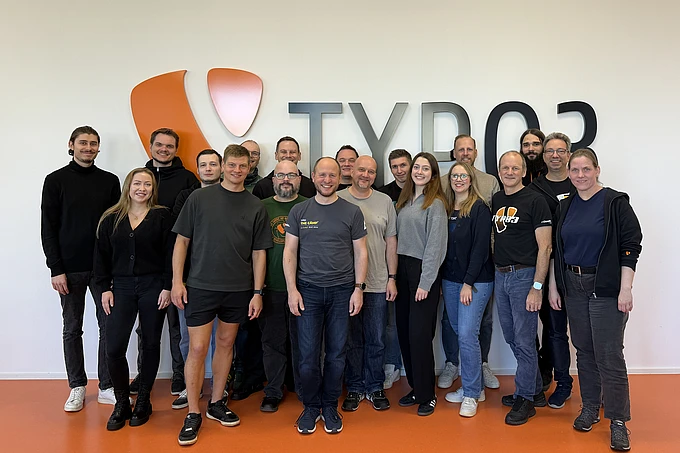
Representatives of all six new TYPO3 Units met on 4–5 November 2026 to put the new governance structure into practice. They agreed on a preliminary lineup of Coordinators and Deputies and prepared proposals for the TYPO3 v15 roadmap. The Units are now inviting contributors to join as Members or Supporters.

Representatives of the six new TYPO3 Units spent two days together. Representatives of the TYPO3 Association Board and the Business Control Committee (BCC) joined them. It was the first time the people behind the new structure sat at the same tables to turn the rules into everyday practice.
Governance may seem far removed from the CMS your websites run on, but it affects it directly. How the TYPO3 project organizes responsibility decides how quickly issues get handled, how reliable the roadmap is, and who is accountable when part of the product needs attention. The Units are designed to make those answers clearer for contributors and for everyone who relies on TYPO3.
tl;dr
- The Units have started work. Representatives of all six TYPO3 Units met in Düsseldorf, Germany, on 4–5 November 2026. This followed the adoption of the Rules for TYPO3 Units at an extraordinary General Assembly on 29 October 2026.
- The lineup is preliminary. Coordinators, Deputies, and founding members are in place for five Units, and the Community Unit’s Coordinator and Deputy roles are still open. Formal elections are planned for the day before TYPO3 Developer Days 2027.
- Teams carry over. Existing teams will not be dissolved overnight. Their work moves into the Units during a transition phase until the end of 2026, often as Working Groups.
- Members and Supporters are equally part of a Unit. Members take on assigned tasks and vote in the Unit Council. Supporters contribute at their own discretion.
- Joining is easier during the launch phase. The six-month Supporter period before becoming a Member has been waived for now. Interested contributors can contact the respective Unit Coordinator.
- Work happens in the open. Each Unit documents its tasks, decisions, and roles publicly and publishes a report on its activities and budget status on TYPO3 News every three months.
Why the TYPO3 Association Introduced Units
The idea of Units goes back to the TYPO3 CMS Product Strategy. The Governance Working Group turned it into concrete rules, which were open for public community review from 6 August to 6 September 2026. At an extraordinary General Assembly on 29 October 2026, the members of the TYPO3 Association adopted the rules.
The summary of the public review explains what changed along the way. The rules, each with a detailed FAQ, are available in the TYPO3 Policy Directory:
Units do not simply replace the existing teams. The teams built what TYPO3 is today, and their work and people carry over into the Units, often as Working Groups. Existing teams will not be dissolved overnight: a transition phase until the end of 2026 allows their work to move step by step into the new structure.
The new structure spreads the work across more people and makes it easier to join. It also helps the project respond faster: under the previous team structure, a new team needed months to demonstrate its right to exist, and budgets were allocated only once a year. Units are organized around broader groups of subject-matter experts and can act across a whole topic area without waiting for other bodies.
How a TYPO3 Unit Is Organized
Unit Charter
Each Unit has a Unit Charter defined by the TYPO3 Association Board. The charter sets out the Unit’s name, its area of responsibility, and the decisions delegated to it. Units make operational decisions, while strategy and budgets remain with the TYPO3 Association, and each Unit needs at least five Members, including the Coordinator and the Deputy Coordinator.
Coordinator
The Coordinator’s job is to organize and delegate rather than do all the work, much like a project manager in a web agency. They set priorities, decide who takes on what, help when a task gets stuck, and report on progress. The Coordinator does not need to be the leading expert in the Unit, has the final say in day-to-day matters, and answers to the TYPO3 Association Board.
Deputy Coordinator
The Deputy supports the Coordinator, often takes over a whole area such as the quarterly report or the Unit’s seat on the Unit Cooperation Panel, and stands in fully when needed. According to estimates presented at the Kickoff, a typical active Unit requires four to six hours a week from its Coordinator and about two hours from its Deputy.
Members
Unit Members are permanent contributors who take responsibility for their Unit’s area and are strongly expected to accept assigned tasks. They help grow contribution and participation by sharing their experience and supporting other contributors.
Supporters
Unit Supporters choose their own tasks without a long-term commitment. Becoming a Supporter happens automatically when a task is formally assigned to someone and they decide to accept it.
Unit Council
Long-term policy and strategy sit with the Unit Council, made up of the Coordinator, the Deputy, and all Unit Members, each with one vote. The Council meets monthly and elects the Coordinator and Deputy for one-year terms; it can also remove either of them with a two-thirds majority of the votes cast. It is consulted on long-term priorities, budget policy, and contribution rules, and it votes on admitting new Members.
Working Groups and Initiatives
A Coordinator can set up Working Groups for permanent topics, such as security handling, and Initiatives that deliver one result by a set deadline and then dissolve. During the Kickoff, each Unit discussed which Working Groups it needs and identified cross-cutting topics that concern more than one Unit.
Transparency and Reporting
Tasks, decisions, structures, and roles are documented publicly by default, and all units must publish rules and objective acceptance criteria for contributions. Every Unit publishes a report on its activities and budget status on TYPO3 News every three months.
Unit Member or Unit Supporter: What Is the Difference?
Members and Supporters are equal parts of a Unit, and both shape its work. You don’t need to be a Member to have influence, for example on how TYPO3 is developed, and a Supporter’s contributions count just as much.
The difference lies in accountability, which is what makes a Unit reliable for everyone who depends on TYPO3. Members take on tasks and have a vote in the Unit Council. Supporters contribute at their own discretion and may decline assigned tasks.
| Unit Member | Unit Supporter | |
|---|---|---|
| Commitment | Permanent and consistent | Flexible, at their own discretion |
| Responsibility | Shares responsibility for the Unit’s area | Responsible for accepted tasks |
| Assigned tasks | Expected to accept them | May decline them |
| Vote in the Unit Council | Yes | No, but may attend |
| TYPO3 Association membership | Active personal membership required | Not required |
| Role expires after | Six months without assigned tasks or activity | Three months without an assigned task |
What Is Expected of Unit Members and Supporters
Unit Members take on responsibility for their Unit’s area. They are permanent, consistent contributors who make sure the Unit’s work gets done. Their main task is to share experience and help other contributors find their way into the project.
Members can ask for specific tasks or have tasks assigned to them, and they should accept assigned tasks. In the rules, should is a strong expectation rather than an option. Once Members accept a task, they complete it to the best of their ability, keep the Coordinator informed about their progress, and raise problems early.
Unit Supporters are for everyone who wants to contribute without a permanent commitment. Someone becomes a Supporter when a task is formally assigned to them, and Supporters decide freely which tasks they take on. They should finish the tasks they accept, may attend Unit Council meetings without a vote, and need neither a TYPO3 Association membership nor a long-term commitment.
The Six TYPO3 Units and Their Founding Members
Each Unit brings together work that is currently spread across many teams and committees. The descriptions below follow the Unit concept presented at the Kickoff, while the Unit Charters define each Unit’s final scope.
During the Kickoff, the Units presented their Unit Charters and confirmed the preliminary lineup below. The first formal elections of Coordinators and Deputies are planned for the day before TYPO3 Developer Days 2027.
How to Join a TYPO3 Unit During the Launch Phase
A Unit can only fulfill its responsibilities with enough people behind it. During the Kickoff, each Unit worked on ways to scale up contributions, so that new people can get involved and stay involved. The Units also prepared their own communication to make it easier to see what each Unit does and where help is needed.
Under the rules (3.1.4.d), a Supporter should work with a Unit for at least six months before becoming a Member. For the launch phase, this requirement has been waived, so you do not need to complete six months as a Supporter first.
If you are not listed above but think you should be a Member, or would like to become one, please contact the Coordinator or Deputy of the Unit. The Coordinator proposes new Members, and the Unit Council votes on their admission. Keep in mind that the Member role comes with the responsibility described above and requires an active personal membership in the TYPO3 Association, and you should be a Member in no more than two Units.
If a long-term commitment isn’t possible for you at the moment, the Supporter role is a good way to get involved. Supporters choose the tasks that match their time and expertise, and their contributions are a valuable part of every Unit’s work. Contributions without any formal role remain welcome, too.
How TYPO3 Units Share Ownership and Make Decisions Together
Besides the CMS itself, the TYPO3 project runs a number of services. In a joint session, the Units looked at who is responsible for each of them, with the aim that every service has a named Service Owner and Maintainer.
Some work crosses Unit boundaries. Merging changes into the TYPO3 Core, for example, concerns both the Feature Unit and the Stability & Compliance Unit.
Existing technical review processes remain in place. What the rules add is that each Unit publishes its contribution rules together with objective acceptance criteria, and that accepting a contribution, which for code means the merge, can be delegated.
To sort out shared areas like the Core, the Units discussed how responsibilities can be split using the RACI model, which defines who is Responsible, Accountable, Consulted, and Informed for a task. The session also covered common acceptance criteria for overlapping areas and the processes and tools the Units will use to work together.
The Unit Cooperation Panel
The Unit Cooperation Panel acts as Product Owner of TYPO3 CMS. In other words, it decides what should be built into TYPO3 and in which order. It creates and prioritizes the TYPO3 Product Roadmap, which the Units then implement in their areas.
The Panel also coordinates topics that span several Units, harmonizes contribution rules and acceptance criteria, and settles which Unit is responsible when areas overlap. Interpersonal conflicts are not part of its remit and are handled through TYPO3’s existing conflict-handling processes. Two delegates from the Panel attend every TYPO3 Association Board meeting, where they can speak but not vote.
Each Unit has one seat on the Panel, held by the Coordinator by default, otherwise by the deputy, and otherwise by a member elected by the unit council. The TYPO3 Association Board chooses one further representative, who cannot chair the panel. The panel meets at least once a quarter, and if possible, at least twice a year in person.
Preliminary Unit Cooperation Panel
During the Kickoff, each Unit prepared proposals for the TYPO3 v15 roadmap. The Panel then held its inaugural meeting and started work on the v15 roadmap and on general frameworks for decision-making and collaboration. The preliminary seats are:
- Community: open
- Content & Communication: Mathias Bolt Lesniak
- Ecosystem: Andreas Kienast
- Feature: Oliver Bartsch
- Knowledge: Sarah McCarthy
- Stability & Compliance: Benjamin Mack
- TYPO3 Association Board: Thomas Maroschik
What Comes Next: TYPO3 Developer Days 2027
TYPO3 Developer Days 2027 is planned as the conclusion of the Unit launch. On the day before, the Units will meet to finish their setup and hold the first formal elections of Coordinators and Deputies, which is also the starting point for finalizing the TYPO3 v15 roadmap.
Until then, you can follow the Units’ work through their public records and their quarterly reports on TYPO3 News. Thank you to everyone who took part in the Unit Kickoff and spent two days working through the details.
