
TCCI Sprint: How We're Preparing the Integrator Certification for TYPO3 v14
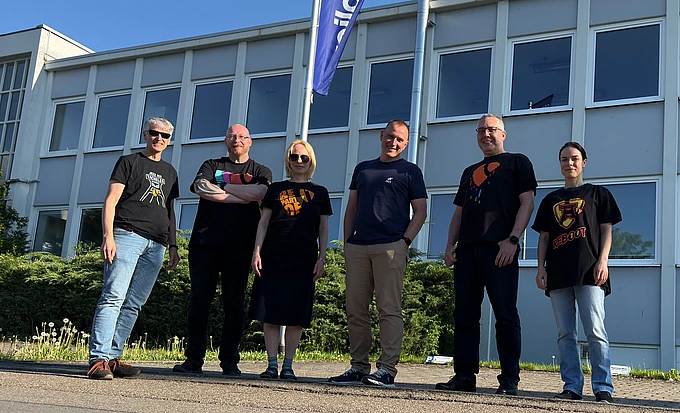
On 9 and 10 May 2026, the TCCI Task Force met in Filderstadt, Germany, for a two-day on-site sprint. The agenda: the syllabus for the Integrator Certification for TYPO3 v14.

We reviewed around 130 existing skills, streamlined them, rewrote some, and removed those that are no longer relevant or no longer considered best practice. Here's what happened during the sprint — and what comes next.
Two Days of Full Focus
Our hosts were Jochen Weiland and his team from jweiland.net. A big thank you for the space and for keeping us well supplied with drinks and snacks.
It was the first time all six current Task Force members came together for an on-site sprint. Smaller in-person meetups have happened before, but our regular exchange takes place online, usually weekly. Working intensively on one topic for two full days was absolutely worth it. We got significantly more done than we would have in a comparable stretch of our regular online meetings. No distractions, no parallel commitments, everyone in the same room.
What Actually Happened
The syllabus is the teaching and examination framework of the certification — a structured list of all the skills a TYPO3 Integrator should have mastered. During the sprint, we worked through around 130 of these skills. Outdated ones were removed, existing ones reviewed and partly rewritten.
A clear focus is on Composer-based installations. We're reducing topics around Classic installations as much as possible, because they barely play a role in practice any more. We also developed a number of new skills for TYPO3 v14. Every team member had their own v14 installation running, so we could test things immediately whenever something was unclear. That kept our discussions practical and grounded.
Best Practice Over Legacy
One question has been running through our work like a common thread for some time now: Is this today's best practice? We ask it for every single skill and every certification question. The aim is to avoid esoteric and non-practical topics — without losing depth in the process.
With TYPO3 v14, the backend has also changed fundamentally. It's become more modern and fresh. Axel Hempelt puts it well:
The moment of change has arrived. Time to say goodbye to the old and give the new a chance. In the TCCI, we want to follow suit and focus exclusively on best practice. Legacy, farewell. I think we're on a really good path with the new TYPO3 v14.
This attitude shapes our work on both the syllabus and the exam questions.
TypoScript: a Quiet Farewell
One point that will certainly spark discussion in the community: TypoScript is losing relevance in practice. Much of what it handled can now be implemented directly in Fluid, and further alternatives are available. We're reflecting this consistently in the syllabus and certification. TypoScript isn't disappearing overnight, but its share of the exam scope is decreasing.
For some members of the team, this gradual farewell prompted more than a few quietly shed tears. TypoScript has shaped the TYPO3 world for decades. We take the change seriously — but we embrace it.
In return, modern techniques are moving more firmly into the foreground. Data processors are becoming more important for integrators, and a little PHP will also find its way into the syllabus — deliberately minimalist. An integrator should, for example, have a rough understanding of how a simple ViewHelper is structured. This isn't a move towards a Developer certification; it's an honest adjustment to what today's practice actually looks like.
Six Perspectives, One Goal
What made the sprint special was the direct exchange between people with very different experience and areas of focus. Sarah McCarthy describes it like this:
Through our conversations, you become aware of topics that are difficult to understand, and you create clarity that you can apply directly in the syllabus and in the questions. And you also become aware of things that you hadn't considered yourself — but that are nonetheless very important.
This mix of individual blind spots and the experience of others is precisely what makes working as a team so valuable. Nobody has a complete overview of every facet of TYPO3 on their own. Six minds get a lot closer.
What Comes Next
The sprint hasn't finished the job. Over the coming days and weeks, we'll be developing more skills for TYPO3 v14, revising existing certification questions, and adding new ones.
Across the entire TYPO3 Education & Certification Committee, we're working towards a shared goal: to have the updated content for TYPO3 v14 ready by the TYPO3 Developer Days. That applies not only to us in the TCCI, but equally to the task forces of the three other TYPO3 certifications: Developer, Editors, and Consultants. We're very confident we'll get there.
Exchange at Camps and Events
We regularly offer sessions on certification at TYPO3 Camps. In addition, members of the Education & Certification Committee are present at almost all TYPO3 events and always happy to talk — regardless of which task force they belong to. We welcome feedback and suggestions from practice outside of events too. That kind of exchange is exactly what helps us keep the syllabus close to real-world TYPO3 work.
Preparation Tip for the Exam
Anyone who wants to prepare specifically for the Integrator Certification should take a look at the syllabus. It lists all the topics that can appear in the exam. One important thing to know: no question will be asked that isn't covered in the syllabus. If you have a solid grasp of the syllabus content, you're well prepared.
You'll find the starting point on the TCCI information page on typo3.com. From there, the link to the syllabus takes you directly to the Skill Display platform. You'll need an account there to use it — you can either register directly with Skill Display or sign in with your my.typo3.org account. Both options are free for users.
Skill Display is more than just a list. The platform helps you keep track of which topics you've already covered. You can tick off individual skills for yourself and see at a glance where you stand and what you still want to work on. Everything is linked to the official TYPO3 certification — once you've earned an official certificate, that will also be visible in your Skill Display profile.
Getting Involved
Work in the TYPO3 Education & Certification Committee is voluntary. We receive no payment for it and invest a considerable amount of our own time. We do it gladly, because good certifications for TYPO3 matter to us.
What helps enormously is the diversity within the team. Some of us have worked with TYPO3 for over 20 years, others considerably less. That mix is precisely what allows us to evaluate the syllabus and exam questions from different angles. This applies not only to the TCCI, but equally to the three other task forces in the Committee.
Anyone who wants to get involved doesn't need to be a walking encyclopedia of TYPO3 documentation. What matters is practical experience and a genuine interest in contributing. Whether you're a developer, integrator, consultant, or editor — if you're interested, you're very welcome.
Who Was There
Present in Filderstadt were Oliver Thiele, Tanja Ulmer, Sarah McCarthy, Axel Hempelt, Steffen Matthes, and Wolfgang Wagner.
We look forward to sharing the first results with you in the coming weeks.
