
Content management systems (CMS) are used for displaying a website. The kicker of a CMS? Code and content are kept in different places. The code of any CMS is usually managed in a source code management system like Gerrit or GitHub - that’s where it “lives”. Content on the other hand “lives” in the CMS. This means that anyone can make changes with amazing speed and flexibility.
Piccia Neri in Conversation at T3DD18


At the recent TYPO3 Dev Days 2018 in Düsseldorf, Jeffrey A. "jam" McGuire (@horncologne) interviewed some community members about TYPO3. Here is an interview with Piccia Neri.
Read moreTYPO3 v9 LTS Released



It's out! The big day came on Tuesday, and the newest major version TYPO3 v9 LTS is available now. Easier workflows for everyday tasks, better site management, and developer experience improvements. Download and give it a spin!
TYPO3 v9 LTS - Benefits for Business Users

Are you excited for the upcoming release day? Next week on Tuesday, October 2nd, TYPO3 CMS v9.5 LTS is released. The newest version will be more user friendly, more mobile friendly, more cloud friendly and especially more business friendly. Learn about the improvements in this article.
On Custom PHP Extensions & TYPO3 Development Skills
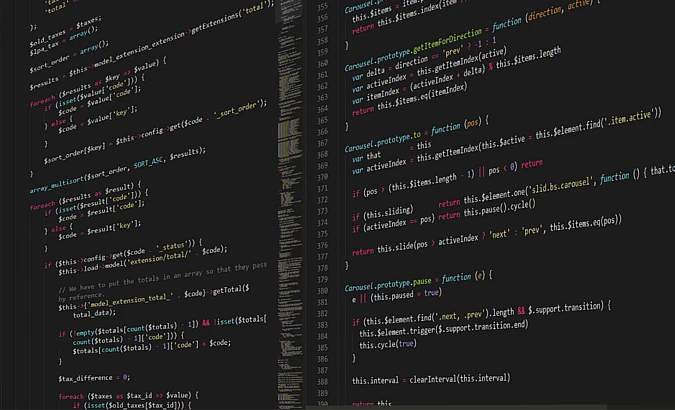

There are three common approaches to building custom PHP extensions. How to acquire the skills you need to make them? Wouldn’t it be great to give a less experienced developer an opportunity to learn, and give them on-the-job training?
Open Source Digital Asset Management With TYPO3 CMS

Today’s business websites require a content management system (CMS) which can easily handle digital media content. TYPO3 CMS streamlines your content management efforts, providing you with Digital Asset Management (DAM) tools right out of the box.
Nuts and Bolts of Content Strategy in TYPO3 CMS


When you plan, write, publish and manage your web content you’ll want to have a well-thought out content strategy and a content management system (CMS) that is geared to support your efforts. Here are four ways TYPO3 does just that.
Best Practices: Style Guide Driven Development With TYPO3


How to develop a website that is both user-friendly and consistent? The solution is to combine TYPO3 CMS and a style guide driven development (SGDD). Learn how to use the latter to create websites with minimal design revisions in our best practices article.
4 Reasons Why So Many Enterprises Use a CMS Like TYPO3

There are lots of ways to build a website, using a content management system (CMS) like TYPO3 is one of them. TYPO3 puts you in the driver seat, lets you easily organize and edit content, and allows for multiple users to add content and keep it up-to-date. Browse our partner finder to find TYPO3 experts who can help you drive your business.
3 Fundamental Technologies of High-Performing, Global Websites

TYPO3 CMS is ready for the most advanced scenarios. Three factors provide the necessary stable foundation for building complex web instances: localization, multisite functionality and TYPO3 extensions.
Medium-Sized Businesses Rely on TYPO3


Compared to other competing content management systems, (CMS) TYPO3 is highly popular among medium-sized businesses - this is what our partners from dkd recently found out by examining over 3,500 websites from the Rhine-Main area. Learn more details in this guest blog post.