
Code & Compliance 2026: Moderating the AI Compliance Conversation in Brussels
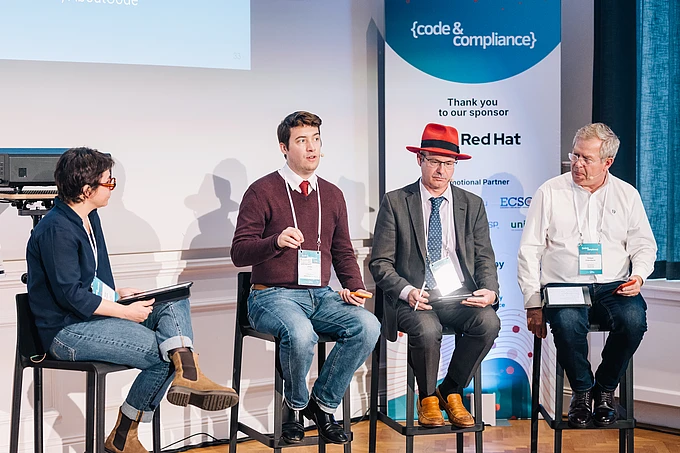
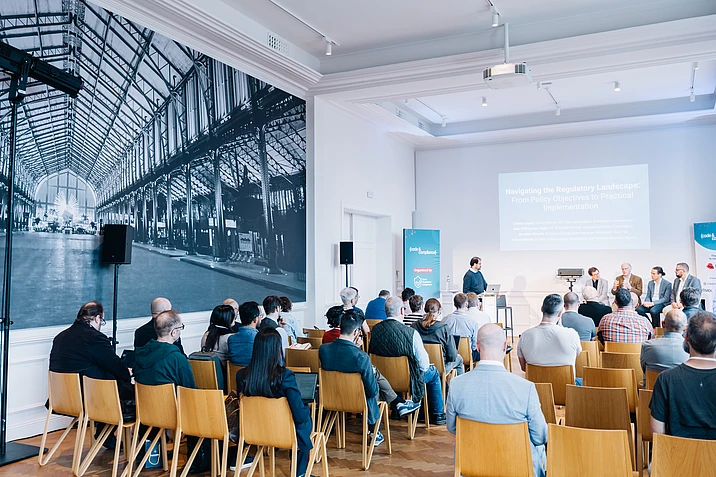
On 27 October, I moderated a roundtable on AI compliance in Brussels, Belgium. It was my third time at this gathering of open source projects and European Commission stakeholders. Here’s what we discussed, and why it matters for TYPO3 agencies and freelancers.

Code & Compliance 2026 is a regular meeting of the people working on compliance in the open source world, together with stakeholders from the European Commission. The Open Regulatory Compliance Working Group (ORC) organizes it under the umbrella of the Eclipse Foundation. The working groups include people from many open source organizations, such as Red Hat, the PHP Foundation, and the Open Source Initiative. The event also brings together other working groups engaged in policy discussions on regulations affecting open source worldwide, with a particular focus on Europe. I attended as the TYPO3 Association’s compliance officer.
This edition was a full day at Maison de la Poste, split into four blocks of talks and panels. The blocks covered the regulatory landscape, the Cyber Resilience Act (CRA), the AI Act, and compliance at industrial scale. For me, the real value of this event lies in the opportunity it gives us to pause and take stock. Our remote meetings tend to focus on specific regulatory topics, leaving little room to exchange views or explore the issues in greater depth. Here, we have more time to share our experience, compare perspectives and learn from one another.
From the Back Row to a Seat at the Table
My first time at Code & Compliance was a year ago. I was there mainly to listen and understand how the group worked: who was involved, what they were focusing on and how the discussions unfolded. I had not yet come as a contributor. Still, I left thinking that this was a place where I could learn more about regulatory topics, meet people facing similar challenges and follow discussions that matter to the open source world.
I came back for the FOSDEM edition on 29 January, during EU Open Source Week and a few days before FOSDEM. This time, I gave my first talk, sharing the TYPO3 Association end-user perspective as the compliance officer of an open source project. Putting that perspective into the discussion helped me move from simply following the group’s work to contributing to it. It also helped me connect with people around concerns we shared.
At the time, the Cyber Resilience Act was the group’s main focus. They were preparing to launch a new special interest group on the AI Act and looking for a co-lead. I accepted. Since then, I’ve been working in close, ongoing collaboration with them.
Looking back, the way I became involved feels familiar. In open source projects, people often start by observing: they follow discussions, learn how the community works and look for the questions that connect with their own experience. Gradually, they find a way to contribute. Through that work, they begin to recognise the people, the shared concerns and the place their own perspective can have in the group. A sense of belonging can grow from that process.
That is what happened to me here. The path from listening in to taking responsibility felt a lot like finding your place in an open source project.
Open Source Projects Face Shared AI Challenges
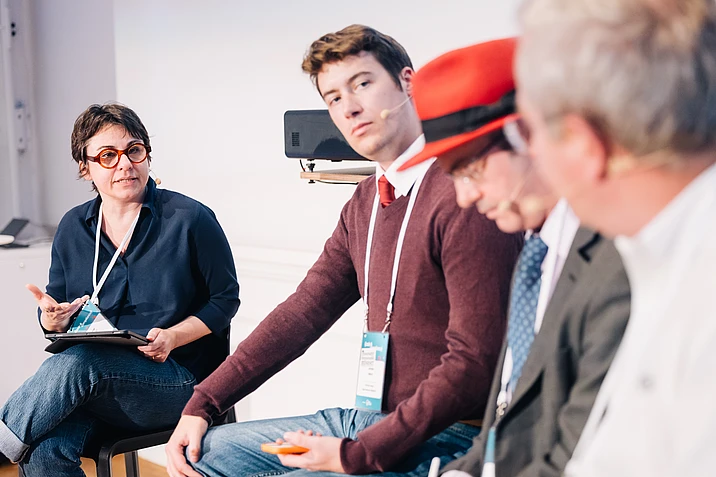
This time, I moderated the roundtable Code, Weights, and Regulation: The New Blueprint for Open AI Security, with Jordan Maris from the Open Source Initiative, James Lovegrove from Red Hat, and Philippe Ombredanne from AboutCode. We discussed the challenges AI and regulation create for open source projects.
The conclusion I took away was simple: AI is not creating entirely new problems for open source; it is mostly accelerating existing ones.
- Open source projects have always had to do a great deal with scarce contributor time and resources. AI is accelerating the cycle from vulnerability discovery to proposed remediation, while the capacity to assess and act on those findings remains constrained. The priority, then, is to make the best use of our limited resources.
- The meaning of open has also long been stretched by some actors. As regulations increasingly refer to open source, those definitions need to be clarified. This is no longer just a question of terminology; it can affect how rules apply to projects and organisations.
- And last but not least, transparency is a longstanding need that has become even more important. We need to understand how a project is governed and where its code comes from. That information is becoming crucial to assess what we are dealing with and respond to the changes AI brings.
Shaping the Rules Before They Land on Our Desks
The idea is not to wait until the regulation is in front of us and we have to apply it with absolutely no knowledge. The TYPO3 Association is a Foundation Member of ORC. Contributing actively to an open working group brings the same benefits as contributing actively to an open source project: knowledge and experience.
There’s one more benefit that’s probably specific to regulation: influence over what happens next. When a regulation comes, there’s always a moment of conversation with the end users it affects. Open source has to lobby in that moment, so the regulation doesn’t put open source in a difficult position compared to others.
For our community, the next step is already on my task list: keep transferring knowledge. Like in many other open source CMSs, our agencies and freelancers may have a lot of questions about these regulations. One of our main tasks as the TYPO3 Association is to give them useful information. We also need to help them recognize when they have an obligation, and when they don’t.
Open Regulatory Compliance Working Group
TYPO3 Association: Foundation Member
Key stakeholders from industry and open source communities are collaborating to support compliance with government regulations, ensuring the continued use and advancement of open source through the software supply chain.
Getting Started With the CRA
Cyber Resilience Act Learning Materials
The Cyber Resilience Act is a European law created to ensure that software products are designed and maintained with security in mind throughout their lifecycle. It entered into force on 11 December 2024. The Open Regulatory Compliance Working Group publishes helpful information and learning materials for open source projects.
Why I Will Keep Coming Back
Thank you to the Open Regulatory Compliance Working Group for bringing everyone together, and for having me moderate the AI roundtable. Thanks to Jordan, James, and Philippe for a conversation that showed how much we have in common. Thanks also to the AI Act SIG members for the weekly work we do together.
For me, the feedback is very positive. I’ll of course come back every time I can, and I strongly recommend open-source projects to join and invest time in this rewarding journey.
The next edition, Code & Compliance — FOSDEM Edition 2027, takes place on 28 January 2027 in Brussels. See the program and call for proposals
