
Changes Coming to the General Assembly 2027
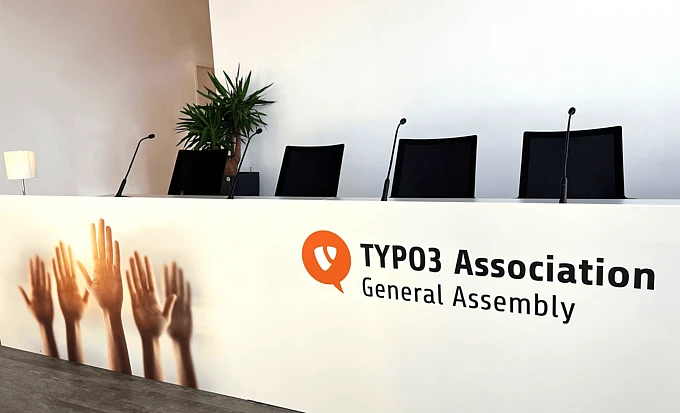
The 2026 General Assembly generated a wave of community feedback. In response, the TYPO3 Association Board has decided to implement changes to the proceedings for the next General Assembly — addressing criticism, suggestions, and practical issues that have built up over the years.

The General Assembly (GA) is more than a formality — it’s the forum where you can vote on the future direction of the TYPO3 project. To do that well, members need time and space to gather information, weigh options, and form opinions.
There is no question that we need a space to thoroughly discuss members’ petitions, ask questions and form opinions on those. The same is true for the reports on the Board’s, Business Control Committee’s (BCC) and Committees’ work. Only this space for dialogue can enable everyone to make informed decisions.
But the GA has proven not to be a sufficient forum for extended discussions. Conversations must always fall short and not all questions could be answered satisfactorily within the limited time constraints of the GA.
After much input from the community, the Board therefore have decided to make a fresh start in 2027.
What Led Us Here?
It’s clear to the Board that we didn’t meet the community’s expectations for the 2026 GA, which triggered some justified criticism of our preparation work.
We recognize the need to work on expectation management — first that the GA is a legal body of the TYPO3 Association, and second that time constraints may not allow for exhaustive discussion within the meeting itself.
And we see that the community did not have sufficient time and space to discuss petitions before the 2026 GA.
Prolonging the duration of the GA to allow for all discussions and questions is not feasible because the GA is already quite long at three hours. This is why we decided to move the bulk of the discussion into an asynchronous requests for comments phase ahead of the actual GA meeting.
We decided after a long discussion weighing the pros and cons to go fully remote with the GA. Physical presence at the GA was declining over the years. As an international project, and respecting that members have other obligations beside their membership, we want to lower the bar to participate. Furthermore, we felt that the hybrid meeting setup was putting a disproportionate disadvantage on members attending remotely to actively participate.
Instead of the rather hands-on solution with Google Meet, we’ll look for a professional tool that will allow us to hold the GA entirely remotely, allowing equal participation for everyone.
What’s Planned for the 2027 General Assembly?
The next ordinary GA on April 13th 2027 will be fully remote.
The Board will publish a binding schedule for the GA’s preparation within the next few weeks. That schedule will include a fair amount of time for all members to review and discuss petitions and reports.
We will establish a dedicated request for comments phase for each petition. The Board is aiming to change the deadline for petitions to more than two weeks before the GA, to give members and petitioners sufficient time to review and discuss. Therefore, an extraordinary GA is planned before the next regular one.
Since the petition deadline is defined by article 12 of the TYPO3 Association by-laws, we will propose a by-law change to the next GA. This will allow for a longer requests for comments phase for any subsequent GA.
After the review and discussion timeframe has ended, the Board will hold a remote Q&A session with members and the petitioners to conclude on open questions and discussions.
During the GA itself, there will be a moderated channel for direct questions, inquiries, and objections for all members
What’s in It for You?
First, much more time to prepare yourself for the GA. Time to discuss and ask questions without being restricted by the limited timeframe of the meeting. All discussions, questions and answers will be documented and available on talk.typo3.org.
We also plan to publish the reports of the Board, the BCC and the Committees beforehand. That will give you time to review those reports and ask your questions without time pressure. You also would not have to decide in the GA on things you just heard a couple of minutes before.
A special Board Q&A session before the GA will also give you an opportunity to join the discussion.
The GA itself will be much more compact and shorter, because it will be reduced to its legal requirements as they are described in article 13 of the by-laws (German original).
Conclusion
We know this represents significant change. But we think these changes are absolutely necessary to meet the community’s expectations, make democratic participation easier, and give the needed space for discussions and opinion-forming.
We hope for your support and are looking forward to hearing your feedback.
