
Board Report: New Responsibilities, Community Work, and a Look-Out for 2026
During the third and fourth quarter of 2025, the TYPO3 Board focused on strengthening governance structures, expanding cross-community networking, and driving technical innovation. From preparing for new EU regulations to active participation in international camps, here is an overview of the board's recent activities.

Board Responsibilities and Structural Changes
A significant shift in board responsibilities took place this quarter. Rachel Foucard took on the fields of Ethical and Legal Compliance alongside Diversity, Inclusion & International Development. She actively represented TYPO3 at the Code and Compliance Community Days in Brussels, focusing on the EU's Cyber Resilience Act and establishing a structured onboarding approach for regulatory standards.
Consequently, the responsibilities for Governance Processes and Risk Management were handed over to Stefan Busemann. Stefan has been instrumental in implementing tender and trademark infringement processes and in managing member exclusions. On the financial front, he oversaw the implementation of price changes for setup fees and memberships while preparing the 2026 Budget. The Business Control Committee (BCC) announced adjustments to the Community Budget structure for 2026, consolidating it from four to three budgets.
Networking and Community Outreach
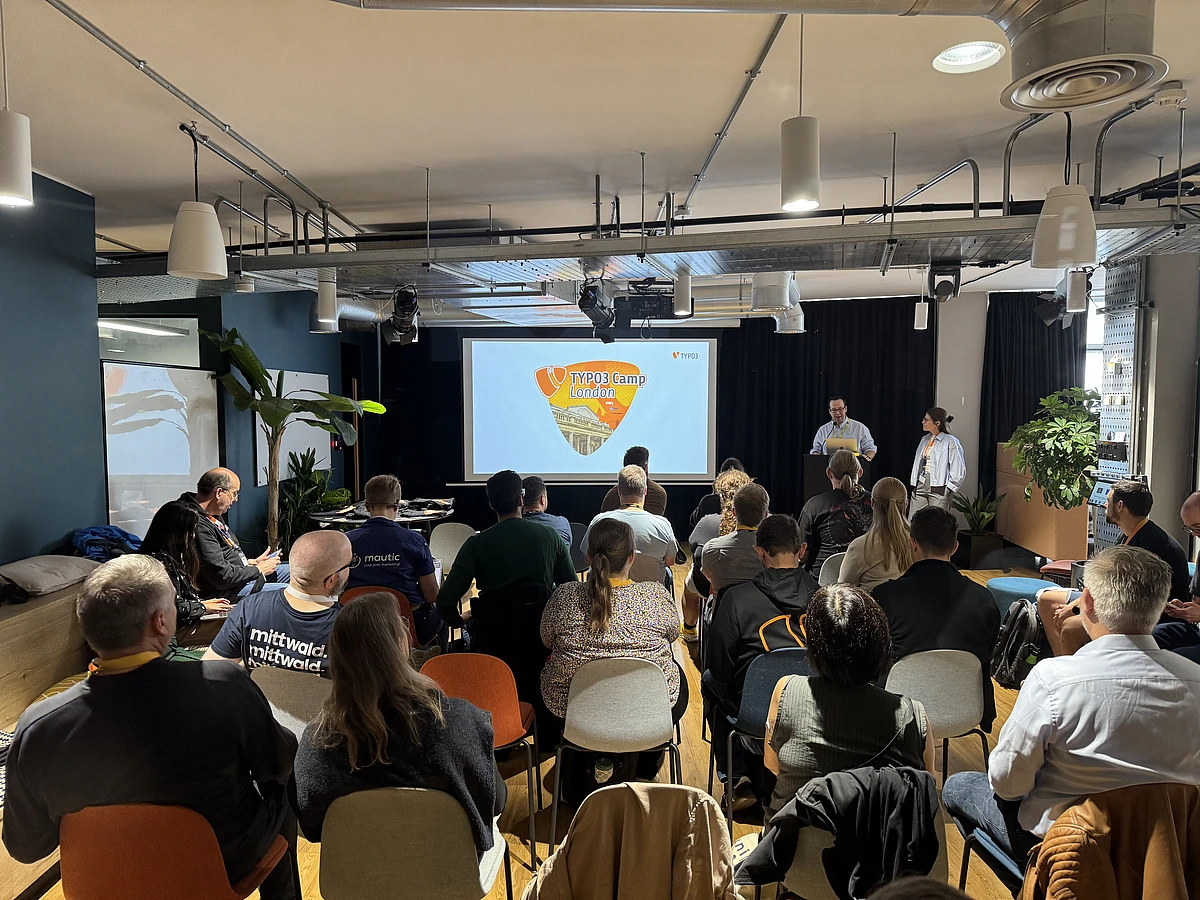
Board members maintained a strong presence at events across Europe. Martin Helmich attended multiple TYPO3Camps, including Munich, London, Berlin, and RheinRuhr, and fostered cross-community relationships by attending the Contao Conference and JoomlaDay to exchange ideas with leaders from other open-source projects. Olivier Dobberkau continued to support the BabesGotBytes initiative, promoting diversity in tech.
Boris Hinzer was equally active, attending the TYPO3 University Days where he delivered a keynote on Association Membership and participated in a panel discussion on ELTS cycles. Boris also addressed the business side of the community, co-presenting with Stefan Bürk on the value of hiring TYPO3 Core Developers.
To continue improving TYPO3’s community trust and healthy collaboration, Rachel prepared a 2026 action plan to adapt the Ombudsperson Committee’s effectiveness and reinforce its operational independence. To support TYPO3’s readiness for the EU Cyber Resilience Act (CRA), she joined the Open Website Alliance discussion channel to collaborate on shared CRA-related actions and align approaches across projects.
Rachel registered to participate in several Brussels events during EU Open Source Week in January 2026, and had her talk accepted for the Code and Compliance, FOSDEM edition event: CRA vs Your Calendar: Making Time for Compliance in Open Source Projects. Rachel shared TYPO3’s concrete case study to convey its stewardship experience and how an open-source organization can take on this new responsibility.

No Digital Sovereignty Without Active FOSS Communities
In Germany — as in many European countries, millions of citizens, thousands of companies — and even administrations and governments — rely on free open source software (FOSS) every day. A current example: the German federal government has decided to switch all federal websites with the Government Site Builder 11 to the free CMS TYPO3.
The federal government's current coalition agreement explicitly refers to digital sovereignty through the use of open source — in other words, less dependence on large US tech companies and geopolitical risks.
Now here's the catch: the work done by tens of thousands of volunteers in open source projects is not recognized as voluntary work in Germany for tax and subsidy purposes. But what could be more charitable than promoting digital sovereignty?
The absurd thing about this is that the federal, state and local governments benefit massively from open source and save millions as a result — but do not officially recognize this commitment.
This is precisely why Boris Hinzer launched the petition Recognition of open source work as voluntary work in Germany. The petition is now available in English, Spanish, French and German.
Spread the Idea
How is the situation in your country? Is voluntary work on FOSS projects already recognised, or is the situation similar to that in Germany? We would be happy to help you adapt and distribute the petition for your country.
T3CON 2025
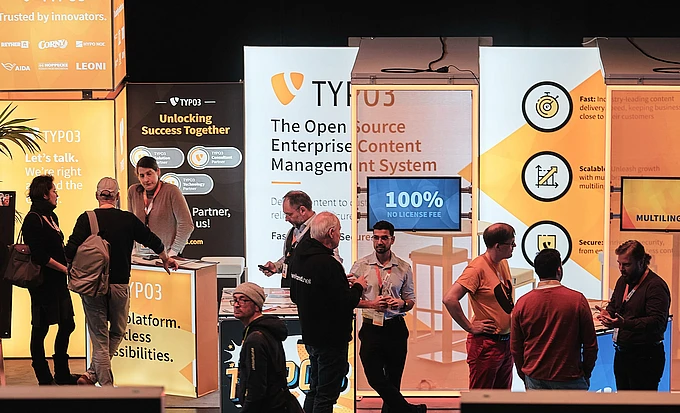
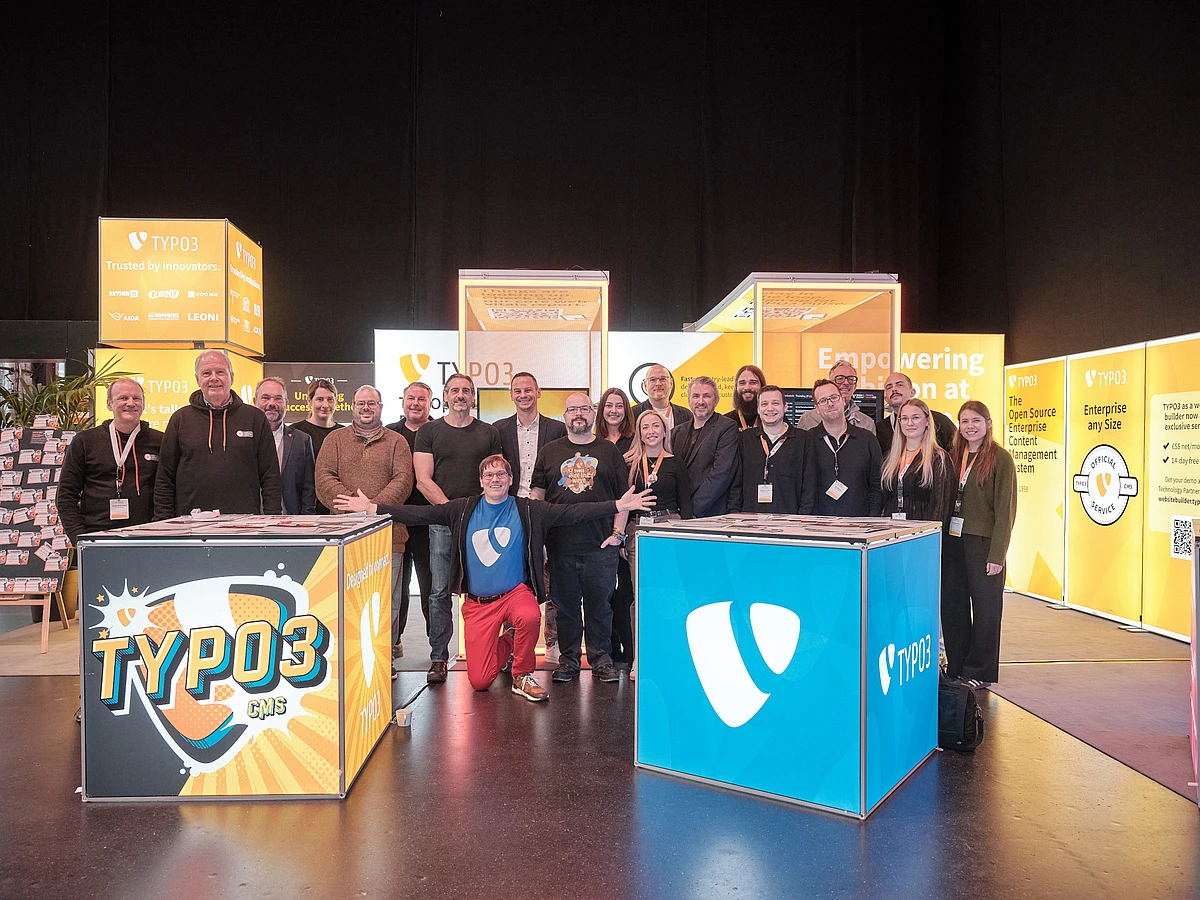
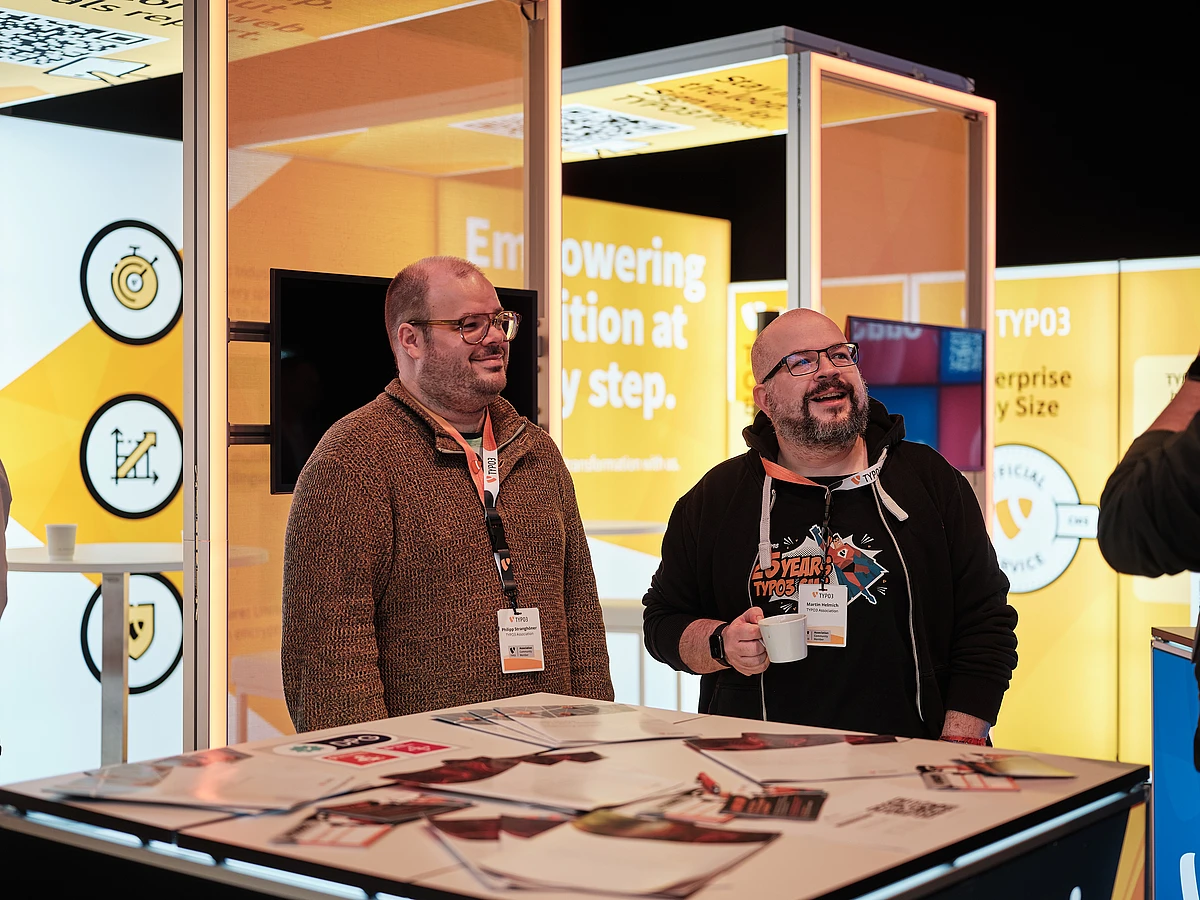
Almost all board members were present at the 2025 TYPO3 Conference in Düsseldorf. Over three days, at least one board member was present at any time at the TYPO3 booth. Open for questions and inquiries by members, users, and people interested in a sustainable open source CMS. One goal was also to strengthen the association's membership base and promote membership.
Before T3CON, the board assembled for its quarterly in-person meeting. The topics of the meeting were:
- Budget planning 2026 (see below)
- Board elections in 2026
- Future of the product strategy
- Board communication
- Policy and compliance rules for paid work
The board also discussed a member's idea to establish a Dutch TYPO3 Committee, which plans to increase TYPO3's visibility in the Netherlands and develop a sustainable, vibrant ecosystem.
Budget 2026, Board Elections, and General Assembly
Stefan prepared the budget for 2026. The Board decided to use €1,000,000 (€50,000 less than 2025). With a member income of around €700,000, we aim to decrease our reserves by €300,000. In 2026, we have three focus areas:
- Community Expansion
- Implementation of Community Ideas
- Core Development
For 2026, three positions on the Board of the TYPO3 Association and two positions on the Business Control Committee (BCC) are up for election.
The next General Assembly (GA) will take place on 22 April in Düsseldorf, Germany. You can either join in person or remotely. You can already register yourself. More details about the GA will be published soon.
Technical Innovation and Projects Innovation
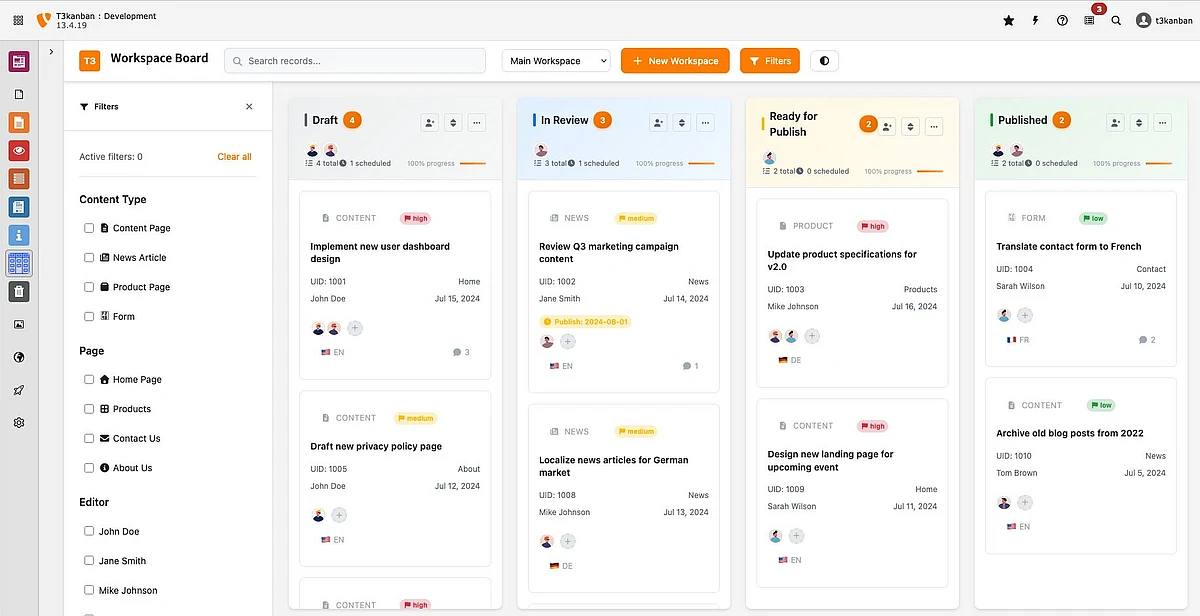
During Q3 and Q4, Martin presented best practices for cloud-native TYPO3 setups and shared updates on MCP server extensions, facilitating communication for the ongoing AI initiative. Boris mentored the development of the Kanban Workspaces module. Following a successful pitch and funding setup, the project has moved into the QA and debugging phase with web-vision, generating interest through articles and social media. The Kanban module will soon be released as an extension for TYPO3 and was developed in a cooperation with devzspaze. BCC member Jochen Weiland provided status updates on GSB11, tracking the progress of government sites and the agencies involved.
All membership interactions are now implemented in my.typo3.org. This improves the usability. The implementation was done by the TYPO3 Company. Also, we are now actively reminding members of upcoming membership renewals.
Brand Protection and Membership Growth
Protecting the TYPO3 brand was a priority in Q3. Boris led efforts to monitor trademark infringements, with a focus on Google and LinkedIn ads. Through direct one-on-one engagement, he successfully converted several cases into new Gold memberships. While the day-to-day trademark monitoring is now handled by the TYPO3 Company to ensure continuous oversight, Boris continues to offer association consulting hours with membership candidates and members. Jochen further clarified rules regarding trademark usage in advertising to ensure consistency across the ecosystem.
tl;dr
During the second half of 2025, the TYPO3 Association Board focused on strengthening governance, expanding networking, and driving technical innovation, including a significant shift in board responsibilities where Rachel Foucard took on Ethical and Legal Compliance and Diversity, Inclusion, & International Development, while Stefan Busemann assumed Governance Processes and Risk Management. Board members maintained a strong presence at camps and conferences like T3CON 2025, where they discussed the 2026 Budget of €1,000,000 with a focus on Community Expansion, Community Ideas, and Core Development, ahead of the next General Assembly on April 22nd in Düsseldorf, Germany, and upcoming board elections. Technical efforts included work on cloud-native setups, the Kanban Workspaces module, and Government Site Builder 11 (GSB11), alongside continuous efforts in brand protection and membership growth, with membership interactions now centralized on my.typo3.org.
